
PE6 Spores
PE6 spores are the reproductive spores of the Psilocybe cubensis PE6 strain, a hybrid of Penis Envy and Texas cubensis valued by collectors for its stable genetics and clear microscopy characteristics.
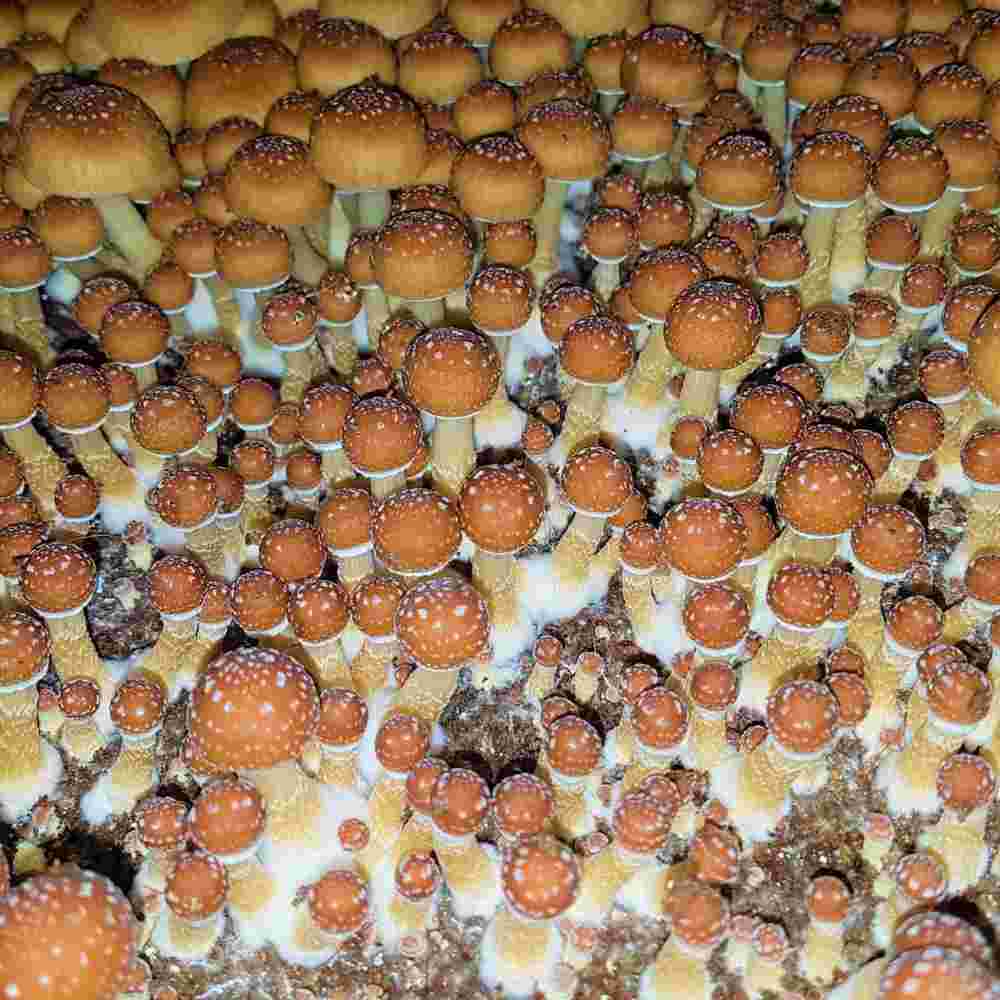
PE6 spores come from one of the most interesting hybrid varieties of Psilocybe cubensis studied by microscopy enthusiasts. Known formally as Psilocybe cubensis PE6, this strain is the result of crossing the famous Penis Envy lineage with a Texas cubensis strain, producing a hybrid that combines distinctive genetics from both parents.
For spore collectors and mycology hobbyists, PE6 spores are particularly intriguing because they represent a deliberate attempt to merge the unusual traits of Penis Envy genetics with the stability of traditional cubensis varieties. Under the microscope, these spores allow researchers to observe classic cubensis structures such as elliptical spore shapes, dark pigmentation, and clearly defined germ pores.
The PE6 strain has gained popularity in the mycology community due to its unique genetic background and its association with the legendary Penis Envy lineage. While the original Penis Envy variety is widely known for its unusual morphology and reputation within mushroom circles, PE6 was developed as a hybrid that preserves some of these characteristics while maintaining the reliable genetic behaviour typical of standard Psilocybe cubensis strains.
Today, PE6 spores are commonly available as spore syringes or spore prints for microscopy study. Collectors often seek them out because hybrid strains provide fascinating opportunities to observe variation in cubensis spore morphology and structure.
In this guide, we will explore the origins of the PE6 strain, its history within mycology communities, its taxonomy, microscopic spore characteristics, storage methods, and why it has become a favourite among spore collectors.
What Is the PE6 Strain?
The PE6 strain, often referred to as Penis Envy 6, is a hybrid variety of Psilocybe cubensis created by combining two well-known genetic lines: the legendary Penis Envy strain and a Texas cubensis variety. The goal of this hybridisation was to blend the distinctive traits of Penis Envy genetics with the more stable and predictable characteristics of traditional cubensis mushrooms.
In the mycology world, the PE6 mushroom strain represents an example of selective isolation within Psilocybe cubensis. Instead of occurring naturally in the wild as a distinct population, PE6 was intentionally developed by isolating and stabilising specific genetic traits through controlled breeding and selection. The resulting strain retains genetic influence from both parent lines.
The name PE6 is short for “Penis Envy 6,” reflecting its connection to the famous Penis Envy lineage while indicating that it is a separate hybrid variety. Over time, the term has become widely recognised within spore trading communities and online mycology forums.
Collectors and researchers often study Penis Envy 6 spores because they represent a hybrid lineage within Psilocybe cubensis. Hybrid strains like PE6 allow microscopy enthusiasts to examine the spore morphology associated with cubensis mushrooms while exploring subtle genetic differences that may exist between strains.
Another reason the Psilocybe cubensis PE6 strain gained popularity is its connection to the broader culture of cubensis strain collecting. Over the years, mycologists and hobbyists have developed hundreds of cubensis varieties, each with its own story, lineage, and reputation. PE6 stands out within this landscape because of its direct genetic link to the highly recognisable Penis Envy family of strains.
Origins and History of PE6
The PE6 strain traces its origins to experimental breeding work carried out by the well-known mycology figure Roger Rabbit, often referred to in forums simply as “RR.” Within the cultivation and microscopy community, Roger Rabbit became known for exploring genetic isolation techniques in Psilocybe cubensis and sharing knowledge about strain development.
The creation of Psilocybe cubensis PE6 involved crossing a Penis Envy variety with a Texas cubensis strain. The Texas lineage was chosen because it is one of the classic cubensis strains that demonstrates strong genetic stability and reliable spore production. By combining these genetics, the goal was to produce a hybrid that preserved aspects of the Penis Envy lineage while maintaining the dependable traits found in standard cubensis mushrooms.
The Penis Envy lineage itself has long fascinated mycologists and collectors. The strain is widely known for its unusual morphology and mysterious history, which has been debated in cultivation circles for decades. Because of this reputation, any strain derived from Penis Envy genetics—such as PE6 spores—tends to attract significant interest among collectors.
During the early 2000s, the PE6 mushroom strain began appearing more frequently within spore trading networks and online mycology forums. These communities played a major role in spreading knowledge about the strain and sharing microscopy samples among collectors.
Hybridisation experiments like PE6 became popular because cultivators and mycologists were curious about how different cubensis genetics could be combined and stabilised. These projects helped expand the diversity of cubensis strains available for study.
Today, Penis Envy 6 spores remain a well-known part of the cubensis strain library, valued by collectors interested in the genetic history and diversity of Psilocybe cubensis.
PE6 Spore Characteristics
From a microscopy perspective, PE6 spores display the classic characteristics associated with Psilocybe cubensis. Studying PE6 spores under a microscope allows mycology enthusiasts to observe several distinctive structural features that define this species.
One of the most recognisable traits is the PE6 spore colour, which typically appears dark purple-brown. This pigmentation is common across many Psilocybe cubensis varieties and becomes especially noticeable when spores accumulate together in a dense spore print. Under magnification, individual spores usually appear deep brown with subtle purplish tones.
In terms of shape, PE6 spores are generally ellipsoid to slightly oval, a morphology typical of cubensis spores. The smooth outer surface and symmetrical profile make them relatively easy to identify during microscopic examination. Spore size generally falls within the expected range for Psilocybe cubensis, typically measuring around 11–14 µm in length and 6–8 µm in width, although slight variation may occur depending on the sample.
A defining microscopic feature of cubensis spores—including those from the PE6 strain—is the germ pore. This small, specialised opening is located at one end of the spore and plays a role in the early stages of germination. Under higher magnification, the germ pore often appears as a subtle flattened region or slightly lighter area on the spore wall.
PE6 spores are produced on basidia, the specialised spore-producing cells found on the gill surfaces of the mushroom. Each basidium typically produces four spores, which develop externally before eventually being released. The spores possess smooth, thickened walls that help protect the genetic material contained within.
When examined microscopically, these features—spore shape, colour, germ pore, and smooth spore walls—allow researchers to clearly recognise PE6 as part of the broader Psilocybe cubensis group.
Macroscopic Characteristics of the PE6 Mushroom
The PE6 mushroom strain displays macroscopic characteristics that closely resemble traditional Psilocybe cubensis varieties, making it visually distinct from its Penis Envy parent lineage. While its genetics trace back to the unusual Penis Envy family, the physical structure of PE6 mushrooms tends to follow the more familiar cubensis morphology.
Cap Characteristics
The cap of the PE6 mushroom typically develops a caramel to golden-brown colour, especially as it matures. Young specimens often begin with a rounded, convex cap shape. As the mushroom develops, the cap gradually expands and may flatten slightly while retaining a smooth surface.
The cap diameter usually falls within the typical cubensis range, creating a classic umbrella-like profile. In some specimens, subtle colour variation may appear across the cap surface, especially toward the centre, which can appear slightly darker.
Stem (Stipe)
The stem, or stipe, of the PE6 strain is usually thick, pale, and fibrous, providing structural support for the cap. Stems often appear whitish to off-white in colour and may show slight surface texture or faint longitudinal fibres.
Compared to some other cubensis varieties, PE6 stems may appear relatively sturdy and straight, contributing to the mushroom’s balanced overall structure.
Additional Traits
As the mushroom matures, the partial veil that initially protects the gills may break, leaving behind visible veil remnants around the stem. These remnants sometimes form a delicate ring-like structure.
Like many cubensis mushrooms, PE6 specimens may also display bluish bruising when handled or disturbed. This colour change is a well-known feature associated with Psilocybe cubensis and is commonly observed across many strains.
Overall, the PE6 mushroom strain is often described as having a classic cubensis appearance. Its cap shape, stem structure, and general morphology closely resemble standard cubensis varieties rather than the mutated appearance commonly associated with the original Penis Envy strain.
PE6 vs Penis Envy (Comparison)
Because the PE6 strain is derived from Penis Envy genetics, it is often compared directly with the original Penis Envy (PE) variety. Although the two strains share a genetic connection, they differ significantly in both morphology and spore production.
One of the most important differences between PE6 vs Penis Envy lies in their physical appearance. Penis Envy mushrooms are known for their unusual, mutated morphology. They typically develop thick stems and underdeveloped caps that often remain partially closed even at maturity. This distinctive shape is one of the defining traits of the original PE lineage.
In contrast, the PE6 mushroom strain generally displays a more traditional Psilocybe cubensis structure. Caps expand normally, stems appear proportionate, and the overall mushroom resembles many other cubensis varieties. This difference in morphology is largely due to the influence of the Texas cubensis genetics used in the hybrid.
Another major difference involves spore production. One of the well-known challenges associated with the Penis Envy strain is its poor spore production. Many PE mushrooms produce few spores or none at all, which makes collecting viable spore prints difficult.
The PE6 hybrid was developed in part to address this issue. Because it incorporates genetics from a standard cubensis strain, PE6 spores are typically produced more reliably, making them far more accessible for microscopy collectors.
PE6 vs Penis Envy Comparison
| Feature | PE6 | Penis Envy |
|---|---|---|
| Spore production | Good and consistent | Often poor or absent |
| Cap shape | Typical cubensis cap | Mutated, often underdeveloped |
| Stem structure | Balanced cubensis morphology | Thick, unusual shape |
| Genetics | Hybrid (PE × Texas cubensis) | Isolated mutation lineage |
For microscopy enthusiasts and collectors, the difference between PE6 and PE is significant. While Penis Envy remains famous for its unique genetic history, the PE6 strain offers a more typical cubensis structure while maintaining a connection to that legendary lineage.
PE6 vs Golden Teacher, B+, and Blue Meanie
When exploring different Psilocybe cubensis varieties, many collectors compare PE6 with other well-known strains such as Golden Teacher, B+, and Blue Meanie. Although these strains belong to the same species, they each have slightly different histories, reputations, and microscopic characteristics that make them interesting subjects for study.
PE6 vs Golden Teacher
The Golden Teacher strain is one of the most widely recognised varieties of Psilocybe cubensis. It is known for its distinctive golden caps and long history within the mycology community. Under the microscope, Golden Teacher spores typically show the classic cubensis features: dark purple-brown colouration, ellipsoid shape, and visible germ pores.
PE6, by comparison, is a hybrid strain created by crossing the Penis Envy lineage with Texas cubensis genetics. While Golden Teacher represents a traditional cubensis variety, PE6 is notable for its hybrid background. For collectors, this makes PE6 particularly interesting from a genetic perspective, as it demonstrates how selective isolation and hybridisation can produce new cubensis variants.
From a microscopy standpoint, both strains display very similar spore morphology. However, PE6 spores are often studied specifically because of their connection to the famous Penis Envy lineage.
PE6 vs B+
The B+ strain is another extremely popular cubensis variety and is often considered one of the most widely circulated strains in spore collections. B+ mushrooms typically display large caps, pale stems, and strong spore production, which has contributed to their widespread availability in spore syringes and prints.
When comparing PE6 vs B+, the biggest difference lies in their origins. B+ is a classic cubensis strain with a somewhat unclear historical origin, whereas PE6 is a deliberately created hybrid involving the Penis Envy lineage.
Microscopically, both strains show similar cubensis spore characteristics. However, PE6 tends to attract collectors who are specifically interested in hybrid strains or in studying spores related to the Penis Envy family.
PE6 vs Blue Meanie
The Blue Meanie cubensis strain is another well-known variety often included in strain libraries. It should not be confused with Panaeolus cyanescens, which is sometimes also called Blue Meanie. In the cubensis context, Blue Meanie refers to a cubensis strain known for its darker caps and reliable spore production.
Comparing PE6 vs Blue Meanie, both strains produce spores with the typical cubensis characteristics: dark purple-brown colour, smooth spore walls, and a visible germ pore under magnification.
The key difference again lies in genetic background. Blue Meanie is considered a traditional cubensis strain, while PE6 represents a hybrid lineage derived from Penis Envy genetics. Because of this, PE6 often attracts collectors interested in the evolutionary development of cubensis strains.
Summary Comparison
| Strain | Notable Trait | Genetic Background | Collector Interest |
|---|---|---|---|
| PE6 | Hybrid cubensis strain | Penis Envy × Texas cubensis | Hybrid lineage study |
| Golden Teacher | Classic well-known cubensis | Traditional cubensis | Widely studied spores |
| B+ | Highly circulated cubensis strain | Traditional cubensis | Strong spore production |
| Blue Meanie | Distinct cubensis variety | Traditional cubensis | Reliable microscopy samples |
For collectors studying cubensis spores, comparing strains such as PE6, Golden Teacher, B+, and Blue Meanie can help highlight the diversity that exists within Psilocybe cubensis while demonstrating how hybridisation projects have contributed to the evolution of modern cubensis strain libraries.
Why PE6 Is Popular Among Spore Collectors
Among microscopy enthusiasts and spore collectors, PE6 spores have gained a strong reputation due to their unusual hybrid lineage and clear microscopic features. Because the PE6 strain combines genetics from the famous Penis Envy lineage with a Texas cubensis strain, it represents an interesting example of deliberate strain hybridisation within Psilocybe cubensis.
One of the main reasons collectors seek out PE6 microscopy spores is their suitability for microscopic study. Like many cubensis varieties, PE6 spores typically display a dark purple-brown colour, ellipsoid shape, and clearly visible germ pore. These characteristics make them relatively easy to observe under magnification, which is valuable for those studying cubensis spore morphology.
Another factor that contributes to the popularity of the PE6 strain is its stable cubensis genetics. While the original Penis Envy lineage is known for inconsistent spore production, the PE6 hybrid generally produces spores more reliably. This allows collectors to obtain usable samples for microscopy without the difficulties sometimes associated with traditional PE strains.
Hybrid strains also hold particular appeal within the mycology community because they allow collectors to study how different genetic lineages interact. Many enthusiasts enjoy examining spores from hybrids like PE6 to better understand the diversity that exists within Psilocybe cubensis.
The strain’s historical connection to experimental breeding projects further adds to its appeal. Early mycology communities were fascinated by the idea of combining well-known cubensis genetics to produce new varieties. As a result, PE6 spores have become a small but important part of cubensis strain history.
For collectors interested in hybrid lineages and the broader genetics of cubensis mushrooms, PE6 offers both educational value and a unique place within the strain library.
PE6 Spore Syringes vs Spore Prints
Collectors studying PE6 microscopy spores typically encounter two main formats: PE6 spore syringes and PE6 spore prints. Both formats contain the same spores but differ in how they are stored, handled, and prepared for microscopic examination.
PE6 Spore Syringes
A PE6 spore syringe contains spores suspended in sterile distilled water inside a sealed syringe. This liquid suspension allows the spores to remain evenly distributed, making it easy to prepare microscope slides.
Many collectors prefer spore syringes because they are convenient and straightforward to use. A small drop of the solution can be placed directly onto a microscope slide for examination. Because the spores are already suspended in sterile water, this format simplifies slide preparation and reduces handling.
Spore syringes are also popular because they allow collectors to work with evenly dispersed spores rather than scraping material from a print.
PE6 Spore Prints
A PE6 spore print is created by allowing a mature mushroom cap to release spores onto a sterile surface such as foil or specialised paper. The resulting deposit forms a dense, visible layer of purple-brown spores.
Spore prints are often valued by collectors because they represent a more traditional method of preserving spores. They are compact, easy to store, and can be kept as part of a long-term strain collection.
From a microscopy perspective, spores can be transferred from the print to a slide using sterile techniques. Many collectors appreciate prints not only for their practical use but also for their archival value, particularly when building a library of cubensis strains.
Both PE6 spore syringes and PE6 spore prints are widely used formats for studying the microscopic characteristics of Psilocybe cubensis.
Proper Storage of PE6 Spores
Proper storage is essential for preserving the quality and longevity of PE6 spores intended for microscopy study. When handled correctly, both spore syringes and spore prints can remain viable for extended periods.
One of the most effective storage methods is refrigeration. Keeping spores at temperatures between approximately 2–8°C helps slow down natural degradation processes and reduces the risk of contamination. Refrigerators provide a stable environment that protects spores from temperature fluctuations.
It is also important to protect spores from light exposure. Ultraviolet light can damage spores over time, which is why spore syringes and prints should be stored in dark environments. Many collectors keep spore samples inside sealed containers or opaque packaging to minimise light exposure.
Maintaining sterile storage conditions is equally important. Spore syringes should remain sealed until they are used, while spore prints should be kept inside protective packaging such as sterile foil or sealed bags. Minimising unnecessary handling helps reduce the risk of introducing contaminants.
When stored correctly, spore syringes typically remain suitable for microscopy for around 12–24 months. In contrast, spore prints can last for several years, particularly when kept dry, cool, and protected from light.
Collectors who want to maximise the lifespan of their samples often follow detailed storage practices. For a deeper guide on preserving spores long term, see our article on How to Store Mushroom Spores for Long-Term Viability, which explains the best conditions for maintaining spore quality over time.
Legal Status of PE6 Spores
The legal status of PE6 spores depends largely on how they are used and where they are located. Like other spores from Psilocybe cubensis, PE6 spores do not contain psilocybin or psilocin. These psychoactive compounds are produced only after mushrooms develop, which means the spores themselves typically contain only genetic material.
Because of this, PE6 spores are legal to possess in many regions when intended for microscopy or mycological study. Collectors, researchers, and hobbyists often purchase spores specifically to examine their structure under a microscope and study cubensis spore morphology.
However, laws can vary depending on local regulations. In the United States, for example, several states restrict the sale or possession of Psilocybe cubensis spores, including California, Idaho, and Georgia. Vendors often do not ship spores to these locations due to these legal restrictions. Please review our Legal Use Policy for more information.
Before purchasing or possessing PE6 microscopy spores, it is important to check local laws and regulations in your country or state. In regions where spores are permitted, they are typically intended strictly for microscopy and educational purposes.
You can read our article, Are Magic Mushroom Spores Legal in the UK?, for more information on the subject.
Where to Buy PE6 Spores
If you are looking to study PE6 spores, it is important to purchase them from a reputable vendor that provides properly prepared microscopy samples. High-quality spores should be collected, stored, and packaged using sterile techniques to preserve their integrity for microscopic examination.
Many collectors choose to buy PE6 spore syringes because they contain spores suspended in sterile distilled water, making them convenient for preparing microscope slides. A single drop from the syringe can be used to create a clear sample for observing spore shape, colour, and germ pores.
Another popular option is the PE6 spore print. Spore prints contain a dense deposit of spores collected on sterile foil or paper. These prints are often valued by collectors because they are compact, easy to store, and suitable for long-term strain libraries.
At Gorilla Spores, PE6 microscopy spores are prepared with careful attention to sterility, quality control, and secure packaging. This ensures collectors receive reliable samples suitable for microscopy research.
Whether you prefer PE6 spore syringes or spore prints, choosing a trusted supplier helps ensure the spores are clean, properly stored, and ready for microscopic study.
Frequently Asked Questions
What are PE6 spores?
PE6 spores are the reproductive spores produced by the Psilocybe cubensis PE6 strain. These microscopic structures contain the genetic material required for mushroom reproduction. Under a microscope, PE6 spores display characteristics typical of cubensis mushrooms, including a dark purple-brown colour, ellipsoid shape, and visible germ pore. Collectors and mycology enthusiasts commonly study PE6 spores to observe these microscopic features and explore the genetics of hybrid cubensis strains.
What does PE6 stand for?
The name PE6 stands for Penis Envy 6, referring to the strain’s hybrid origin. The PE6 strain was created by crossing the famous Penis Envy lineage with a Texas cubensis strain. The goal was to combine some of the distinctive genetics of Penis Envy with the stability and reliable spore production associated with standard Psilocybe cubensis varieties. As a result, PE6 represents a hybrid strain within the cubensis family.
Are PE6 spores legal?
In many regions, PE6 spores are legal because mushroom spores themselves do not contain psilocybin or psilocin. This allows them to be sold and possessed for microscopy or educational study. However, laws vary depending on location. In the United States, for example, the sale or possession of Psilocybe cubensis spores is restricted in California, Idaho, and Georgia. Anyone interested in purchasing spores should always check their local laws before ordering.
What colour are PE6 spores?
Like many Psilocybe cubensis varieties, PE6 spores typically appear dark purple-brown. Individual spores may look dark brown with a slight violet tint under a microscope. When many spores accumulate together, such as in a spore print, they form a dense purple-brown deposit. This distinctive colour is one of the features mycologists use to identify cubensis spores.
Are PE6 spores good for microscopy?
Yes, PE6 spores are well suited for microscopy study. Their relatively large size and distinctive pigmentation make them easy to observe under magnification. Under a microscope, collectors can examine spore shape, the germ pore, and other structural details typical of Psilocybe cubensis. Because the PE6 strain tends to produce spores reliably, it is often considered a practical option for those studying cubensis spore morphology.
What is the difference between PE6 and Penis Envy?
The difference between PE6 and Penis Envy mainly involves morphology and spore production. Traditional Penis Envy mushrooms often produce very few spores due to their unusual mutated structure. The PE6 hybrid was developed to overcome this limitation by incorporating genetics from a Texas cubensis strain. As a result, PE6 typically produces spores more consistently and has a more typical cubensis mushroom shape.
Do PE6 spores come in syringes or prints?
Yes, PE6 spores are commonly available as both spore syringes and spore prints. Spore syringes contain spores suspended in sterile distilled water, making them convenient for preparing microscope slides. Spore prints consist of a dense layer of spores collected on sterile foil or paper. Both formats are widely used by collectors studying cubensis spores under a microscope.
How long do PE6 spores last?
The lifespan of PE6 spores depends largely on how they are stored. Spore syringes stored in a refrigerator at temperatures around 2–8°C can often remain viable for microscopy use for 12–24 months. Spore prints stored in dry, cool, and dark conditions may last even longer, sometimes for several years. Proper storage helps preserve spore integrity and prevent contamination.
Conclusion
The PE6 strain is one of the most interesting hybrid varieties within the Psilocybe cubensis strain library. Created by combining the famous Penis Envy lineage with a Texas cubensis strain, Psilocybe cubensis PE6 represents a deliberate attempt to merge distinctive genetics with the stability of traditional cubensis varieties.
For microscopy enthusiasts and spore collectors, PE6 spores offer a unique opportunity to study a hybrid lineage within the cubensis species. Their dark purple-brown pigmentation, ellipsoid shape, and clearly visible germ pore make them well suited for microscopic examination. Because the strain typically produces spores more reliably than its Penis Envy parent, PE6 has become a practical choice for collectors interested in observing cubensis spore morphology.
The historical connection to early strain hybridisation projects also adds to the appeal of the PE6 mushroom strain, making it a notable entry in the broader world of cubensis genetics.
Collectors interested in studying PE6 microscopy spores can find carefully prepared spore syringes and spore prints available from Gorilla Spores, where quality, sterility, and collector-focused packaging are prioritised.

Written by the Gorilla Spores Research Team
The Gorilla Spores Research Team produces and reviews educational content focused on Psilocybe cubensis strains, spore morphology, and microscopy-based observation. All reference material is created for lawful research and educational purposes and is reviewed for accuracy, clarity, and responsible presentation. View author profile