
Mexican Dutch King Spores
Mexican Dutch King Spores are a well-established Psilocybe cubensis strain known for their distinctive lineage history, stable spore morphology, and popularity among microscopy collectors.
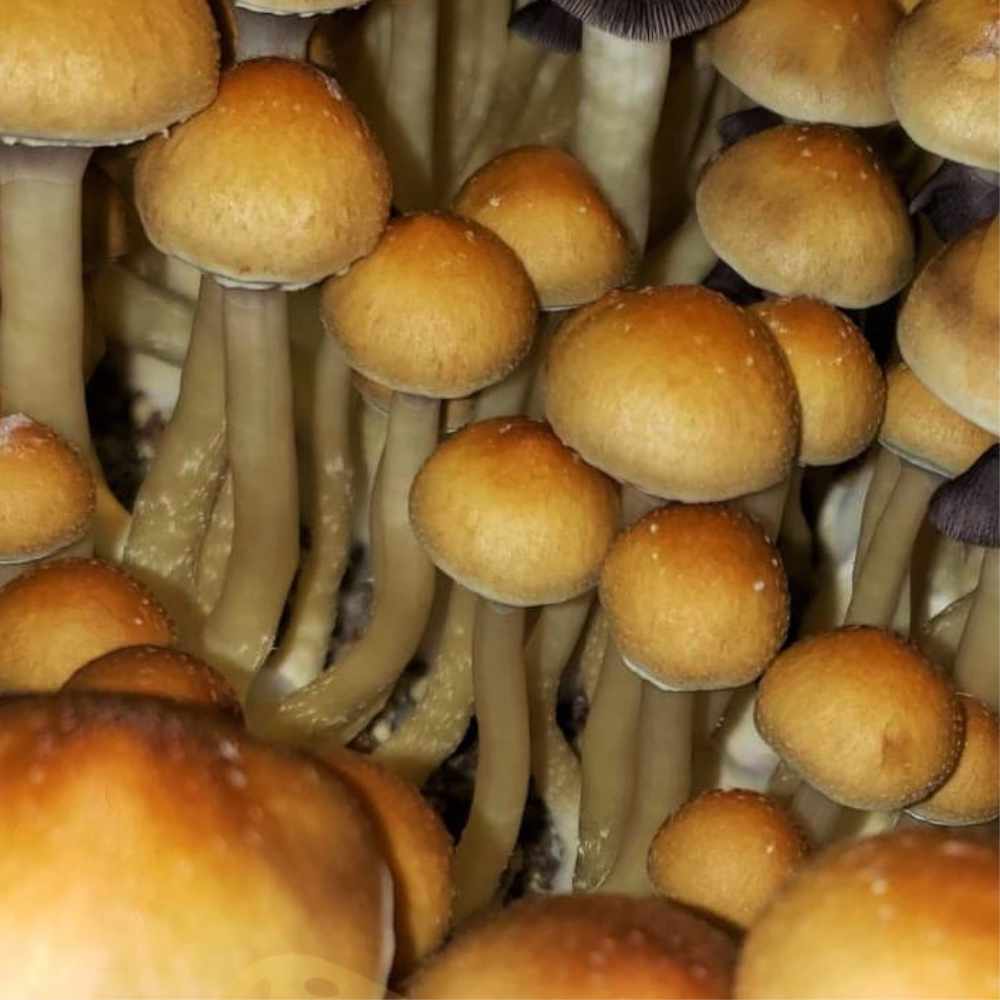
- Species: Psilocybe cubensis
- Strain: Mexican Dutch King (MDK)
- Spore Colour: Purple-brown (in mass deposition)
- Print Density: Typically heavy
- Microscopy Use: Taxonomy, spore morphology analysis, educational study
- Circulation History: Long-standing commercial lineage within microscopy communities
What Are Mexican Dutch King Spores?
Mexican Dutch King Spores are a recognised strain within the species Psilocybe cubensis, one of the most widely circulated and studied fungi in modern microscopy communities. When people refer to Mexican Dutch King cubensis spores, they are describing a specific lineage within this species rather than a separate biological classification.
From a scientific standpoint, species classification follows formal taxonomic hierarchy: Kingdom, Phylum, Class, Order, Family, Genus, and Species. Mexican Dutch King falls at the species level under Psilocybe cubensis. The “Mexican Dutch King” designation does not represent a new species; instead, it identifies a preserved and distributed strain within the broader cubensis framework.
Species vs Strain: Understanding the Difference
A species is defined by shared genetic and morphological characteristics. A strain, by contrast, is a lineage that has been isolated, named, and maintained through selective preservation and distribution. Strains often arise through regional discovery, collector naming conventions, or commercial circulation history.
In the case of Mexican Dutch King spores, the strain name reflects lineage heritage rather than taxonomic separation. Under microscopy, they display the defining cubensis characteristics: ellipsoid spores, smooth walls, visible germ pore, and purple-brown spore deposition. These are species-level traits, not unique strain markers.
Why Strain Names Exist
Strain names serve practical purposes within microscopy and spore collection communities. They allow collectors to:
- Track lineage history
- Preserve specific genetic isolations
- Differentiate commercial batches
- Build organised spore libraries
Over time, certain strains gain recognition due to consistency, distribution history, or collector reputation. Mexican Dutch King is one such lineage that has maintained visibility within cubensis culture.
Cubensis Lineage Culture
Within the cubensis ecosystem, strain names function as identifiers within a largely informal but widely accepted naming tradition. Unlike formal taxonomic classification, cubensis strain culture is shaped by collector networks, vendor circulation, and long-term preservation efforts.
As a result, Mexican Dutch King spores represent not a biological divergence from other cubensis strains, but a documented lineage within the broader species — valued for its established presence and continued circulation in microscopy communities.
The Origins of Mexican Dutch King (MDK)
The history of Mexican Dutch King (MDK) is rooted in the informal but well-established naming traditions of the cubensis microscopy community. Like many strains of Psilocybe cubensis, Mexican Dutch King does not have a formally documented origin in peer-reviewed taxonomic literature. Instead, its identity developed through collector culture, early commercial distribution, and lineage preservation practices.
The “Mexican” Naming Tradition
The term “Mexican” within cubensis strain names typically reflects historical association with specimens believed to originate from Mexico. Mexico holds a significant place in modern mycological history, as early documented cubensis collections and ethnomycological research in the mid-20th century brought international awareness to the species.
As cubensis spores began circulating among microscopy enthusiasts and commercial vendors, many strains were named to reflect either their believed geographic origin or to associate them with established Mexican lineages. In this context, “Mexican” in Mexican Dutch King suggests lineage heritage connected to early Mexican cubensis stock rather than verified contemporary wild collection data.
The “Dutch” Reference
The inclusion of “Dutch” in the strain name likely reflects European circulation history, particularly within the Netherlands. During the late 1990s and early 2000s, Dutch vendors played a central role in the commercial distribution of cubensis spores across Europe.
The Netherlands became a hub for spore availability due to relatively permissive regulations at the time regarding spore sales for microscopy purposes. Many strains that passed through Dutch vendor networks adopted identifiers referencing this distribution pathway. As a result, Mexican Dutch King likely earned its “Dutch” designation during this period of expanded European circulation.
Early Spore Vendor Distribution
Strain names such as Mexican Dutch King often originated within early online vendor catalogues rather than academic publications. Vendors distinguished their stock through naming conventions designed to indicate lineage, exclusivity, or regional association.
Once a strain entered circulation under a specific name, it could spread rapidly through collector networks, online forums, and microscopy trading communities. Over time, repeated distribution under a consistent name helped solidify its identity within the cubensis ecosystem.
Informal Naming vs Scientific Classification
It is important to clarify that strain names like Mexican Dutch King are not formally recognised by taxonomic authorities. Biological classification recognises Psilocybe cubensis at the species level, but strain distinctions exist outside official scientific nomenclature.
Instead, these names function within a parallel system shaped by collector culture and commercial lineage preservation. While not taxonomically formal, strain names remain meaningful within microscopy communities because they provide continuity, traceability, and structured identification for preserved spore lines.
In this way, Mexican Dutch King represents a documented lineage within cubensis culture – shaped by geography, commerce, and community tradition rather than formal scientific reclassification.
Taxonomy & Classification Breakdown
Understanding the taxonomy of Mexican Dutch King spores requires separating formal biological classification from informal strain naming traditions. While “Mexican Dutch King” identifies a specific lineage within cubensis culture, its scientific classification follows the established hierarchy of fungal taxonomy.
Mexican Dutch King belongs to the species Psilocybe cubensis, and all strain-level distinctions exist beneath this formal biological classification.
Kingdom to Species
Below is the full taxonomic breakdown from highest to species level:
Kingdom: Fungi
Mexican Dutch King spores belong to the fungal kingdom, organisms distinct from plants and animals, characterised by spore-based reproduction and chitin-containing cell walls.
Phylum: Basidiomycota
This phylum includes fungi that reproduce through the formation of basidiospores on specialised cells known as basidia. Many familiar gilled mushrooms fall into this category.
Class: Agaricomycetes
A large class containing most of the commonly recognised mushroom-forming fungi.
Order: Agaricales
Often referred to as the “gilled mushrooms,” this order includes numerous species with umbrella-shaped fruiting bodies and lamellae (gills).
Family: Hymenogastraceae
This family groups related genera that share structural and genetic characteristics within the Agaricales order.
Genus: Psilocybe
The genus contains multiple species characterised by specific spore morphology, including purple-brown spore deposits and a distinct germ pore.
Species: Psilocybe cubensis
At the species level, Mexican Dutch King spores share the defining biological and morphological traits that classify them as cubensis.
Where the Strain Fits In
“Mexican Dutch King” exists below the species level and does not alter its formal taxonomy. Strains are preserved lineages within a species, typically maintained through selective distribution and collector culture rather than scientific reclassification.
This means that regardless of strain name – whether Mexican Dutch King, B+, Z-Strain, or Amazonian – all remain biologically classified as Psilocybe cubensis.
Microscopic Characteristics of Mexican Dutch King Spores
The microscopic profile of Mexican Dutch King spores aligns closely with the established morphological traits of Psilocybe cubensis. While strain-level differences within cubensis are typically subtle, careful observation under magnification allows researchers to evaluate structural consistency, spore dimensions, and diagnostic features.
Below is a detailed breakdown of the key microscopic characteristics observed in Mexican Dutch King cubensis spores.
Spore Shape
Mexican Dutch King spores are typically ellipsoid to sub-ellipsoid in form. This means they appear elongated with slightly rounded ends when viewed under high magnification (400x–1000x).
In taxonomic terminology, cubensis spores are described as:
- Ellipsoid
- Smooth
- Thick-walled
- With a distinct apical germ pore
Compared to other cubensis strains such as B+ or Z-Strain, Mexican Dutch King spores do not display dramatic structural deviation in shape. The ellipsoid morphology remains consistent across most preserved cubensis lineages, supporting their classification within the same species.
Spore Size (µm Ranges)
Spore size is measured in micrometres (µm) using calibrated microscopy equipment. Mexican Dutch King spores generally fall within the typical cubensis size range:
Length: approximately 11–17 µm
Width: approximately 7–12 µm
Minor variation may occur due to:
- Slide preparation method
- Hydration state
- Natural biological variation
When compared to other cubensis strains, Mexican Dutch King spores do not consistently exhibit extreme size differentiation. Instead, they fall squarely within the standard morphological envelope of Psilocybe cubensis.
Spore Colour in Mass Deposition
When deposited in mass (for example, on foil or sterile paper), Mexican Dutch King spores produce a deep purple-brown spore print. This coloration is one of the primary diagnostic features of cubensis species.
Under transmitted light microscopy, individual spores may appear lighter or translucent. However, when observed collectively in mass, the purple-brown pigmentation becomes clearly visible.
This spore colour is consistent across most cubensis strains, including Golden Teacher, Amazonian, and Cambodian variants. The similarity reinforces that strain names reflect lineage identity rather than pigment divergence.
Germ Pore Structure
One of the most important diagnostic features of cubensis spores is the apical germ pore.
The germ pore is a slightly flattened or truncated area at one end of the spore, representing the site where germination occurs. Under sufficient magnification, the germ pore appears as a subtle thinning or circular region in the spore wall.
Mexican Dutch King spores typically exhibit:
- Clearly visible apical germ pore
- Central to slightly off-centre positioning
- Smooth surrounding spore wall
Presence of a distinct germ pore is essential in confirming cubensis classification and distinguishing it from other genera within the Agaricales order.
Surface Texture
Mexican Dutch King spores possess a smooth (non-ornamented) outer wall, described in mycological terms as lacking reticulation or spiny ornamentation.
This smooth surface:
- Supports clear light transmission
- Enhances slide clarity
- Aligns with cubensis species characteristics
Unlike some fungal species that display textured or warted spores, cubensis strains remain consistently smooth across lineage variations.
Spore Wall Thickness
The spore wall (also called the perispore) is relatively thick compared to many other fungal taxa. This contributes to structural durability and long-term specimen stability when properly stored.
Under oil immersion microscopy, researchers may observe:
- A defined outer wall boundary
- Subtle internal pigmentation
- Uniform wall consistency
Wall thickness remains consistent with other cubensis strains and does not significantly vary at the strain level.
Morphology Reference Diagram
Below is a simplified structural diagram of a typical cubensis spore:
        _____________
      /               \
     |      (      )      |
      \_____________/
            ↑
         Germ Pore
Key:
- Ellipsoid shape
- Smooth outer wall
- Apical germ pore
Comparative Overview
When compared to other cubensis strains, Mexican Dutch King spores demonstrate morphological consistency rather than distinct structural divergence. Differences between strains are typically subtle and may involve minor dimensional variation or spore print density, but the fundamental microscopic traits remain species-standard.
This consistency reinforces the classification of Mexican Dutch King as a lineage within Psilocybe cubensis, rather than a separate biological entity.
From a scientific standpoint, Mexican Dutch King spores serve as a stable representative of cubensis morphology making them suitable for taxonomy study, educational microscopy, and structured spore library documentation.
Mexican Dutch King vs Other Cubensis Strains
Within the broader Psilocybe cubensis ecosystem, Mexican Dutch King spores are often compared with other well-known cubensis strains. While all share the same species-level morphology, differences in circulation history, collector recognition, and perceived lineage stability help distinguish them within microscopy communities.
It’s important to emphasise that these differences are primarily cultural and historical rather than taxonomic. Under the microscope, core structural traits remain consistent across cubensis strains.
Mexican Dutch King vs B+
B+ is one of the most widely distributed cubensis strains globally. It gained popularity due to strong commercial circulation in North America and Europe.
Compared to B+, Mexican Dutch King spores are slightly less ubiquitous but still maintain long-standing commercial lineage recognition. Both strains typically produce heavy purple-brown spore deposits, making them reliable for slide preparation.
In terms of collector reputation, B+ is often viewed as a “foundational” cubensis strain, while Mexican Dutch King appeals more to collectors interested in preserving historically circulated European-associated lineages.
Mexican Dutch King vs Golden Teacher
Golden Teacher is one of the most recognisable cubensis names, particularly in educational settings. Its popularity stems largely from brand recognition rather than dramatic microscopic differentiation.
Spore print density between Golden Teacher and Mexican Dutch King is generally comparable, though individual batches may vary. Mexican Dutch King spores are often described as stable and consistent, similar to Golden Teacher in terms of structural presentation.
Collector perception tends to place Golden Teacher at the forefront of beginner-friendly recognition, while Mexican Dutch King holds appeal for those building a more diverse cubensis archive.
Mexican Dutch King vs Amazonian
Amazonian cubensis strains are associated with South American lineage heritage. Compared to Amazonian variants, Mexican Dutch King spores reflect a lineage narrative rooted in Mexican origins and European distribution.
Microscopically, both exhibit the standard cubensis traits: ellipsoid spores, smooth walls, visible germ pore, and purple-brown deposition. Differences are primarily historical rather than morphological.
Collector reputation for Amazonian strains often emphasises geographic heritage, whereas Mexican Dutch King highlights distribution lineage history.
Mexican Dutch King vs Z-Strain
Z-Strain is another well-established cubensis lineage known for widespread circulation and consistent spore prints. Both Z-Strain and Mexican Dutch King share strong reputational stability in microscopy circles.
Z-Strain may be slightly more globally recognised, but Mexican Dutch King maintains its place as a preserved and historically circulated variant, particularly within European vendor networks.
Comparative Overview Table
| Strain | Circulation History | Spore Print Density | Collector Reputation | Lineage Stability |
|---|---|---|---|---|
| Mexican Dutch King | European-linked commercial lineage | Heavy | Established, niche recognition | Stable |
| B+ | Widely distributed globally | Heavy | Foundational cubensis strain | Very stable |
| Golden Teacher | Highly popular commercial strain | Moderate–Heavy | Extremely recognisable | Stable |
| Amazonian | South American heritage association | Moderate–Heavy | Geographic lineage appeal | Stable |
| Z-Strain | Long-standing vendor circulation | Heavy | Highly recognised | Very stable |
Summary
From a microscopy perspective, Mexican Dutch King spores remain consistent with other cubensis strains at the structural level. Differences between strains primarily reflect circulation history, collector culture, and lineage branding rather than biological divergence.
For collectors building a comprehensive cubensis reference collection, including Mexican Dutch King alongside B+, Golden Teacher, Amazonian, and Z-Strain strengthens lineage diversity while maintaining taxonomic consistency.
Storage and Preservation Guide
Proper storage is essential for maintaining the microscopic integrity of Psilocybe cubensis Mexican Dutch King spores. When handled and stored correctly, microscopy specimens can remain suitable for educational and taxonomy research for extended periods.
How to Store Mexican Dutch King Spores
The best way to how to store Mexican Dutch King spores is to maintain a cool, dark, and sterile environment that minimises biological and environmental degradation.
Spore syringes and prints should be kept sealed in their original sterile packaging whenever possible. Exposure to airborne contaminants increases the risk of microbial growth and may reduce specimen clarity during microscopy observation.
Refrigeration is widely recommended for long-term storage. The ideal storage temperature range is approximately 2°C to 8°C, which helps slow natural biological activity without introducing freezing-related structural stress.
Light Exposure
Ultraviolet and direct sunlight exposure should be avoided. Light exposure can contribute to gradual pigment and structural degradation over long periods.
Specimens should be stored in opaque containers or kept inside refrigerator compartments that are not directly illuminated.
Refrigeration and Temperature Stability
Refrigeration is the preferred storage method for microscopy-grade spore specimens.
Important considerations include:
- Avoid placing spores near freezer compartments
- Prevent repeated temperature cycling
- Allow specimens to return to near room temperature before microscopy preparation
Sudden temperature fluctuations may affect suspension stability in spore syringes.
How Long Do Cubensis Spores Last?
Shelf life estimates depend heavily on storage conditions. When stored properly, how long do cubensis spores last can vary by specimen format:
- Spore syringes: typically 6–24 months under refrigeration
- Spore prints: may remain viable for several years in sterile storage
- Swab specimens: longevity depends on packaging integrity
These estimates are general guidance rather than guaranteed biological lifespan predictions.
Signs of Potential Contamination
Specimens should not be used if any of the following are observed:
- Cloudy or discoloured spore suspension
- Visible microbial or fungal growth inside packaging
- Unusual particulate clumping
- Compromised seal or container damage
If contamination is suspected, the specimen should be safely discarded and replaced.
Handling Protocols
When working with Mexican Dutch King spores:
- Use sterile tools and clean preparation surfaces
- Minimise repeated syringe agitation
- Replace protective caps immediately after use
- Avoid unnecessary exposure to open air
Careful handling helps preserve specimen quality and microscopy clarity.
Preservation Summary
Maintaining stable refrigeration, limiting light exposure, and ensuring sterile storage conditions are the primary factors influencing the longevity of Mexican Dutch King spores. Following these guidelines supports long-term preservation for educational and taxonomy research purposes.
For full storage instructions, see:
How to Store Mushroom Spores
Legal Status in the UK & International Considerations
The sale and possession of Psilocybe cubensis spores, including Mexican Dutch King spores, is generally permitted within the United Kingdom when specimens are intended strictly for microscopy, taxonomy, and educational research purposes.
Under current UK legislation, spores that do not contain active psychoactive compounds are not classified in the same category as controlled fungal material. However, it is important to emphasise that legality is determined by intended use. Mexican Dutch King spores supplied by Gorilla Spores are marketed exclusively for research, scientific observation, and educational microscopy.
Research-Only Use Statement
All products sold through Gorilla Spores are intended solely for laboratory-style observation and educational study. Customers must understand that these spores are not sold for cultivation, ingestion, or any activity that violates local regulations. Please review our Legal Use Policy for more information.
Responsibility for lawful use rests entirely with the purchaser. Customers should ensure they are familiar with the laws governing fungal specimen possession in their region before placing an order.
International Shipping and Import Considerations
Legal regulations surrounding microscopy spores vary significantly outside the UK. Some countries impose strict restrictions on fungal spore importation regardless of intended research use.
International customers are responsible for verifying:
- Local customs regulations
- Import legality of microscopy specimens
- Agricultural or biosecurity restrictions
- Personal compliance with national laws
Gorilla Spores cannot guarantee successful international delivery where customs restrictions apply. Orders may be delayed, inspected, or returned depending on destination country regulations.
Compliance and Consumer Responsibility
By purchasing Mexican Dutch King spores, customers acknowledge that they are acquiring specimens strictly for legitimate scientific and educational purposes.
Gorilla Spores operates with a strong commitment to responsible distribution of microscopy research materials. Our goal is to support educational mycology while maintaining full respect for UK and international legal frameworks.
If you are uncertain about the legal status of spores in your jurisdiction, it is recommended to review local legislation or seek appropriate guidance before ordering.
Frequently Asked Questions
Are Mexican Dutch King spores a separate species?
No. Mexican Dutch King spores belong to the species Psilocybe cubensis. The name refers to a strain lineage rather than a distinct biological species.
What does “Dutch” refer to in Mexican Dutch King?
The “Dutch” component is believed to reflect historical European circulation of the strain through microscopy vendor networks rather than a specific biological or geographic classification.
What colour are Mexican Dutch King spores?
Mexican Dutch King spores typically produce a purple-brown spore print when deposited in mass, which is characteristic of cubensis species.
How long do Mexican Dutch King spores last?
When stored correctly under refrigeration and sterile conditions, spore syringes may remain suitable for microscopy research for approximately 6–24 months, while spore prints may remain stable for several years.
Are Mexican Dutch King spores legal in the UK?
Yes. In the United Kingdom, cubensis spores are generally permitted for possession and sale when intended strictly for microscopy, taxonomy, and educational research purposes.
Are Mexican Dutch King spores different from Mexican cubensis?
Microscopically, Mexican Dutch King spores are consistent with standard Psilocybe cubensis morphology. Differences between strains are primarily lineage-based rather than species-level structural variation.
How should Mexican Dutch King spores be stored?
They should be stored in cool, dark, sterile conditions. Refrigeration between 2°C and 8°C is recommended for long-term preservation.
Are Mexican Dutch King spores suitable for beginners?
Yes. Their classic cubensis morphology and stable presentation make them suitable for microscopy learning and educational observation.

Written by the Gorilla Spores Research Team
The Gorilla Spores Research Team produces and reviews educational content focused on Psilocybe cubensis strains, spore morphology, and microscopy-based observation. All reference material is created for lawful research and educational purposes and is reviewed for accuracy, clarity, and responsible presentation. View author profile