
Hillbilly Spores
Hillbilly spores are a popular Psilocybe cubensis lineage originating from Arkansas, valued by microscopy collectors for their classic purple-brown spores, heavy spore prints, and well-known cubensis heritage.
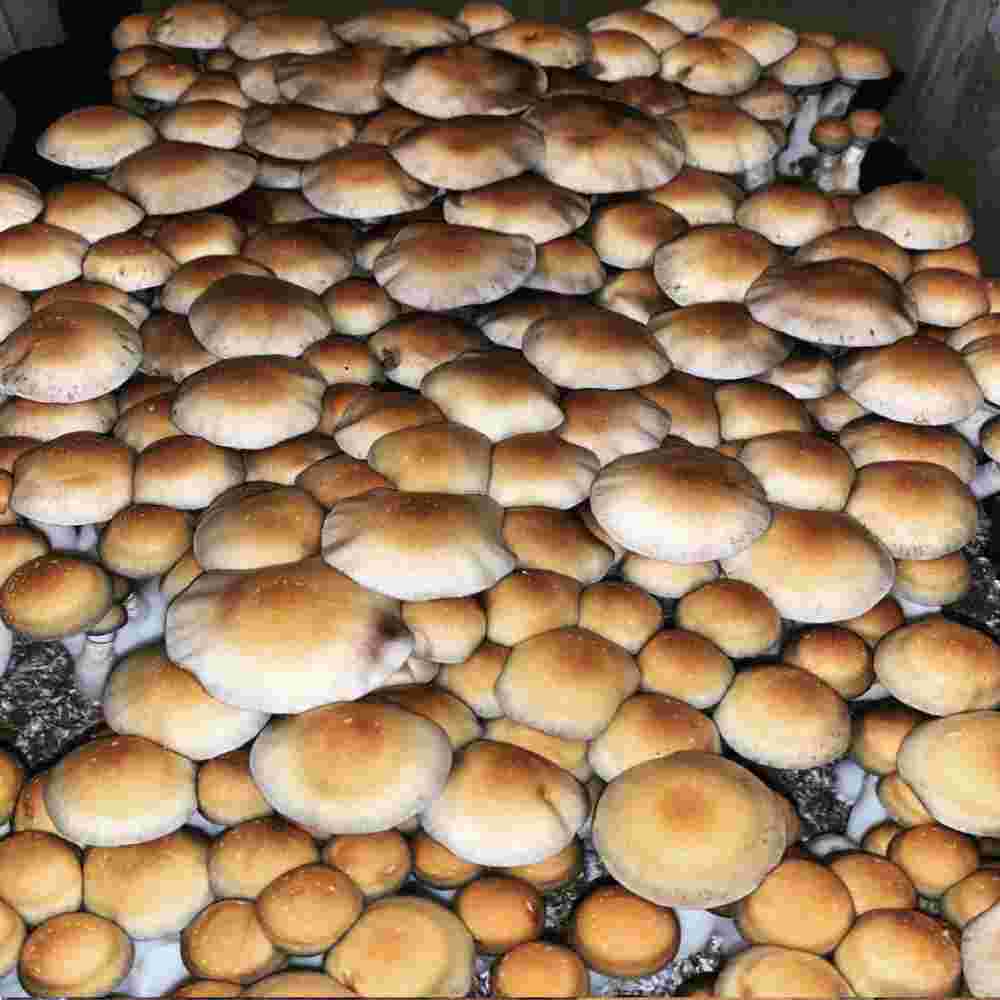
Introduction to Hillbilly Spores
Hillbilly spores are a well-known lineage within the species Psilocybe cubensis, one of the most widely studied mushrooms in modern mycology. Psilocybe cubensis is recognised for its distinctive purple-brown spores and global distribution, making it a popular subject for microscopy research and fungal taxonomy studies.
Within this species, numerous strain names have emerged to identify particular lineages that circulate among collectors and spore vendors. The Hillbilly strain is one such lineage, widely recognised within microscopy communities for its historical circulation and reputation among spore collectors.
Hillbilly cubensis spores are commonly distributed in several formats used for microscopy observation and archival collection. These include spore prints, spore syringes, and sterile swabs, each allowing researchers to examine spore morphology under magnification. The spores display the classic cubensis characteristics that make them valuable specimens for studying fungal structures such as germ pores, spore wall thickness, and ellipsoid spore shape.
The Hillbilly lineage is believed to trace its origins to cubensis samples historically associated with the southern United States, particularly Arkansas. Over time, spores from this lineage spread through early spore trading networks and online mycology communities, eventually becoming a staple strain in many spore vendor catalogues.
Today, Hillbilly spores remain a popular choice for collectors interested in documenting cubensis lineage diversity. Their long-standing reputation and consistent morphological characteristics make them a notable entry within the broader world of Psilocybe cubensis microscopy research.
Quick Facts About Hillbilly Spores
Below is a quick reference overview of key characteristics associated with Hillbilly cubensis spores.
| Attribute | Details |
|---|---|
| Species | Psilocybe cubensis |
| Strain Name | Hillbilly |
| Spore Colour | Purple-brown |
| Print Density | Heavy |
| Lineage Origin | Arkansas cubensis lineage |
| Microscopy Use | Spore morphology and taxonomy study |
| Circulation | Widely traded vendor lineage |
These quick facts provide a concise summary of the Hillbilly strain and help researchers quickly identify its place within the broader Psilocybe cubensis lineage ecosystem. Because this information is presented in a structured format, it also improves readability and increases the likelihood of appearing in featured snippets within search results, making it easier for users to find key details at a glance.
What Are Hillbilly Spores?
Hillbilly spores are microscopic reproductive cells belonging to a lineage of the species Psilocybe cubensis, a fungus widely studied within mycology and fungal taxonomy. Like all spores produced by Psilocybe cubensis, Hillbilly cubensis spores are responsible for the natural reproductive cycle of the organism and contain the genetic material necessary to form new fungal growth under appropriate conditions.
From a biological perspective, Hillbilly mushroom spores are not a separate species. Instead, they represent a strain lineage within Psilocybe cubensis. In mycology, the term strain typically refers to a population or lineage of organisms that share similar genetic traits and historical origin but still belong to the same species.
Species vs Strain
Understanding the difference between species and strain is important when studying fungal taxonomy.
A species is a formal scientific classification used to group organisms with shared evolutionary characteristics. In this case, Psilocybe cubensis is the species designation recognised in scientific literature.
A strain, on the other hand, is an informal way of identifying particular genetic lineages or populations within a species. Strains often develop unique names when they are discovered in specific regions or become widely circulated through research communities.
The Hillbilly strain therefore sits within the broader species classification of Psilocybe cubensis. Although it may carry distinctive naming traditions and a documented circulation history, its spores still exhibit the same core microscopic characteristics seen across cubensis varieties.
Why Strain Names Exist
Strain names like Hillbilly help researchers, collectors, and vendors track the lineage history of spores circulating within mycology communities. Because cubensis spores have been shared and studied globally for decades, naming conventions emerged as a practical way to differentiate between samples that originated from different sources or locations.
For microscopy collectors, these names help document the historical distribution of fungal specimens. While the underlying biology remains the same species, strain names provide context about where the spores came from and how they became part of the wider cubensis research ecosystem.
As a result, Hillbilly cubensis has become recognised as one of many named lineages within Psilocybe cubensis, contributing to the diverse catalogue of spores available for microscopy study.
Origins of the Hillbilly Strain
The Hillbilly strain is widely believed to originate from cubensis specimens historically associated with the southern United States, particularly the state of Arkansas. Although precise documentation is limited, as is common with many early cubensis lineages, the Hillbilly name has long been connected with fungal samples reportedly collected in rural regions of the area.
Like many strains within Psilocybe cubensis, the Hillbilly lineage gained recognition through the gradual circulation of spores among early collectors and vendors. During the late 20th century, mycology enthusiasts began sharing spore prints and specimens through underground networks, research forums, and eventually the growing online spore marketplace.
Early Spore Circulation
In the early days of cubensis research communities, spores were frequently exchanged through mail trading networks among amateur mycologists. Spore prints from particular collections were given informal names so collectors could track their origin and share them more easily with others.
The Hillbilly strain likely entered wider circulation through this type of informal distribution. As spore vendors began cataloguing and selling different cubensis lineages, the Hillbilly name became attached to samples believed to originate from Arkansas collections.
Over time, these spores became a recognised entry in many vendor catalogues and were included alongside other well-known cubensis strains.
Geographic Naming Traditions
Many cubensis strains are named after the location where the original specimens were reportedly discovered. Examples include Amazonian strains associated with South America or Gulf Coast varieties linked to the southern United States.
The Hillbilly name likely reflects this tradition of geographic and cultural naming. In rural parts of the southern United States, the word “hillbilly” has historically been used to describe people living in mountainous or countryside regions. The name therefore serves as a cultural reference to the strain’s reported origins.
Community Lineage Tracking
Within the mycology community, strain names function as a way to track the historical movement of spores between collectors, researchers, and vendors. Over time, certain lineages become well-known due to their long circulation history and continued presence in spore catalogues.
Hillbilly cubensis is one such lineage, recognised by collectors who follow the historical development of cubensis strains within microscopy culture.
Strain Names and Scientific Classification
It is important to note that strain names such as Hillbilly are not official taxonomic classifications. They do not represent separate species or formally recognised subspecies within fungal taxonomy.
Instead, these names are informal labels used within the mycology community to describe particular lineages of Psilocybe cubensis. This distinction helps maintain scientific accuracy while still allowing collectors and researchers to document the historical diversity of cubensis spores.
Understanding this naming system provides useful context for anyone studying Hillbilly spores as part of the broader world of cubensis microscopy research.
Taxonomy & Scientific Classification
The Hillbilly strain belongs to the species Psilocybe cubensis, a fungus that sits within a well-defined taxonomic hierarchy used in modern mycology. Taxonomy provides a systematic way to classify living organisms based on shared characteristics, evolutionary relationships, and genetic similarities.
Understanding the scientific classification of Hillbilly spores helps place this strain within the broader context of fungal biology.
Taxonomic Hierarchy
The full classification of Psilocybe cubensis is as follows:
Kingdom
Fungi
Phylum
Basidiomycota
Class
Agaricomycetes
Order
Agaricales
Family
Hymenogastraceae
Genus
Psilocybe
Species
Psilocybe cubensis
Each level of this hierarchy reflects increasingly specific biological relationships. The kingdom Fungi includes all fungal organisms, while the phylum Basidiomycota contains fungi that reproduce through structures known as basidia, which produce spores externally.
Within this group, the class Agaricomycetes includes many familiar gilled mushrooms. The order Agaricales encompasses a wide range of mushroom-forming fungi, while the family Hymenogastraceae contains several genera associated with gilled mushrooms that produce dark-coloured spores.
The genus Psilocybe is characterised by certain microscopic and structural features that distinguish it from other mushroom groups. Within this genus, the species Psilocybe cubensis is one of the most widely studied and documented.
Where Hillbilly Fits Within the Taxonomy
The Hillbilly strain exists at the lineage level within the species Psilocybe cubensis. This means it shares the same biological classification as many other well-known cubensis strains, including Golden Teacher, B+, Amazonian, and Z-Strain.
Although these strains may have different historical origins or naming traditions, their spores typically exhibit the same fundamental microscopic characteristics associated with the species. These include ellipsoid spore shape, purple-brown spore deposits, and a visible germ pore.
Because Hillbilly spores belong to the same species as other cubensis lineages, they are not considered a separate taxonomic category. Instead, the strain name simply identifies a particular lineage that has circulated within mycology communities.
Microscopic Characteristics of Hillbilly Spores
Under microscopic examination, Hillbilly spores display the classic morphological characteristics associated with the species Psilocybe cubensis. These features allow mycologists and microscopy enthusiasts to identify the spores and confirm their placement within the cubensis species group.
While strain names may differ across the mycology community, the core microscopic traits of cubensis spores remain highly consistent. Observing these features is one of the primary reasons Hillbilly mushroom spores are used in educational microscopy research.
Spore Shape
Hillbilly spores exhibit the ellipsoid shape typical of Psilocybe cubensis. When viewed under magnification, the spores appear oval or slightly elongated, with rounded ends and a smooth outer boundary.
This ellipsoid morphology is one of the defining characteristics used to identify cubensis spores under the microscope. Although slight variation can occur between individual spores, the overall shape remains relatively consistent across different cubensis strains.
Spore Size
The size of Hillbilly cubensis spores generally falls within the typical range for the species. Most spores measure approximately:
11–17 micrometres (µm) in length
This size range is widely reported in mycological studies of Psilocybe cubensis. Measuring spores within this range helps confirm the species classification during microscopic observation.
Because spores are extremely small, magnification of 400x to 1000x is typically used when studying their dimensions and internal structures.
Spore Colour
Individually, cubensis spores may appear pale or slightly translucent under the microscope. However, when many spores accumulate together, they form the characteristic purple-brown spore deposit associated with Psilocybe cubensis.
This colour becomes most visible when observing spore prints or dense concentrations of spores collected on slides. The purple-brown pigmentation is one of the most widely recognised identification markers for cubensis spores.
Germ Pore
One of the most distinctive microscopic features of Hillbilly spores is the germ pore, a small opening located at one end of the spore. This structure is visible under magnification and plays an important biological role in fungal development.
The germ pore represents the location where a germ tube can emerge during the early stages of fungal growth. In cubensis spores, the germ pore is usually prominent and clearly visible, making it an important diagnostic feature for microscopy study.
Spore Wall
Hillbilly spores possess a relatively thick spore wall, which helps protect the internal genetic material from environmental stress. This protective layer contributes to the durability of spores and allows them to remain stable during storage when handled properly.
Under high magnification, the wall appears as a defined outer boundary surrounding the spore’s internal contents.
Surface Texture
The outer surface of cubensis spores is generally smooth, lacking the ridges or ornamentation seen in some other fungal species. This smooth texture is another identifying characteristic used by mycologists when examining spores from the genus Psilocybe.
Microscopy Diagram
Below is a simplified diagram illustrating the typical structure of a cubensis spore and the location of the germ pore.
     ________
   /          \
  |            |
  |            |
   \____  ____/
        \/
     Germ Pore
Although this diagram represents a simplified model, it highlights the key structures that are commonly observed when studying Hillbilly spores under a microscope.
By examining features such as spore shape, size, colour, germ pore structure, and surface texture, researchers can confirm that Hillbilly mushroom spores share the classic morphological traits associated with Psilocybe cubensis. These microscopic characteristics form the scientific foundation for identifying cubensis spores and contribute to the ongoing study of fungal taxonomy.
Hillbilly vs Other Cubensis Strains
The Hillbilly strain is one of many named lineages within the species Psilocybe cubensis. Over the past several decades, numerous cubensis strains have entered circulation through mycology communities, research forums, and spore vendors. While these strains often carry unique names and origin stories, their spores typically share the same core microscopic characteristics.
Comparing Hillbilly cubensis with other well-known strains helps place it within the broader ecosystem of cubensis research and spore collecting.
Shared Spore Morphology
Despite the wide range of strain names, the spores of most Psilocybe cubensis lineages are remarkably similar under microscopic examination. Hillbilly mushroom spores share the defining traits seen across the species, including:
- Ellipsoid spore shape
- Purple-brown spore deposits
- Smooth spore surface
- Prominent germ pore
These characteristics are consistent with the species classification of Psilocybe cubensis. As a result, strains such as Hillbilly, Golden Teacher, B+, Amazonian, and Z-Strain cannot usually be distinguished from one another based solely on spore morphology.
Instead, the differences between strains tend to relate to historical origin, naming traditions, and circulation within the mycology community.
Naming Traditions
Many cubensis strains are named after either geographic locations or descriptive characteristics associated with the original specimen collections. For example:
- Golden Teacher is one of the most widely recognised cubensis lineages, known for its long-standing presence in mycology communities.
- B+ is a popular strain with a reputation for broad circulation among collectors and vendors.
- Amazonian refers to cubensis specimens historically associated with South American environments.
- Z-Strain is believed to be a stabilised lineage that gained popularity through early spore vendors.
The Hillbilly strain follows a similar naming pattern, referencing the rural cultural identity often associated with parts of the southern United States, particularly Arkansas. These naming conventions are informal and help collectors track the lineage history of different cubensis samples.
Popularity Among Collectors
Because cubensis spores have been shared globally for decades, certain strains have developed strong reputations within the spore collecting community. Hillbilly cubensis spores are frequently included in vendor catalogues due to their historical lineage story and long-standing presence in circulation.
Collectors interested in documenting cubensis diversity often obtain multiple strains in order to compare spore morphology, print density, and lineage history. In this context, Hillbilly spores are often studied alongside other classic cubensis strains.
Print Density Comparison
Most Psilocybe cubensis strains produce dense spore deposits, resulting in dark purple-brown spore prints. Hillbilly spores are known for producing heavy prints, which makes them suitable for microscopy slide preparation and long-term archival storage.
Below is a simplified comparison of several popular cubensis strains.
| Strain | Spore Colour | Print Density | Lineage Type |
|---|---|---|---|
| Hillbilly | Purple-brown | Heavy | Arkansas lineage |
| Golden Teacher | Purple-brown | Heavy | Classic lineage |
| B+ | Purple-brown | Heavy | Widely circulated |
| Amazonian | Purple-brown | Heavy | South American lineage |
| Z-Strain | Purple-brown | Heavy | Stabilised commercial lineage |
Although these strains may carry different historical backgrounds, they all belong to the species Psilocybe cubensis and therefore share similar microscopic features.
For researchers and collectors, the value of comparing these strains lies not in major biological differences but in documenting the cultural and historical evolution of cubensis lineage names within mycology communities.
Spore Print Characteristics
One of the most recognisable features of Hillbilly spores is the appearance of their spore prints, which display the characteristic purple-brown colour associated with the species Psilocybe cubensis. Spore prints are created when large numbers of spores are deposited onto a surface, forming a visible pattern that reflects the arrangement of the mushroom’s gills.
Although individual spores are microscopic and difficult to see with the naked eye, the accumulation of thousands of spores results in a clearly visible spore deposit.
Purple-Brown Spore Deposits
Hillbilly cubensis spores produce the classic purple-brown spore colour typical of Psilocybe cubensis. This pigmentation becomes most apparent when spores accumulate in dense layers, forming dark deposits that contrast strongly against lighter surfaces.
The purple-brown colour is one of the most reliable visual identifiers used in mushroom taxonomy when examining spore prints.
Heavy Print Density
Another characteristic of Hillbilly mushroom spores is their heavy print density. When spores are deposited in large quantities, the resulting spore print appears dark and well-defined.
Dense spore prints are particularly useful for microscopy research because they provide ample material for slide preparation. Collectors often value strains that consistently produce strong spore deposits, as this allows for repeated microscopic observation.
Visual Characteristics
Spore prints produced by cubensis mushrooms often display a circular or radial pattern that mirrors the structure of the mushroom cap and gill arrangement. The centre of the print may appear darker due to the higher concentration of spores falling directly from the central gill structures.
Edges of the print can appear slightly lighter where fewer spores accumulate. These subtle variations in density can create visually striking patterns that highlight the natural symmetry of fungal spore dispersal.
Print Shape Patterns
The shape of a spore print is typically influenced by the size and form of the mushroom cap from which the spores originated. In most cases, the print forms a rounded or dome-shaped pattern, reflecting the radial layout of gills beneath the cap.
Studying spore prints like these provides valuable insight into fungal identification and morphology. For microscopy collectors researching Hillbilly cubensis spores, the combination of purple-brown pigmentation, heavy print density, and symmetrical spore deposition makes these prints an informative and visually distinctive part of cubensis taxonomy.
Storage & Preservation Guide
Proper storage is essential for maintaining the quality and longevity of Hillbilly spores used in microscopy research. Because spores are microscopic biological structures, they can degrade if exposed to excessive heat, light, or contamination. Understanding how to store Hillbilly spores correctly helps preserve their structural integrity for future observation and study.
Hillbilly spores belong to the species Psilocybe cubensis, and their storage requirements are similar to those of other cubensis spores commonly circulated within mycology research communities.
Ideal Temperature
The most widely recommended storage method for cubensis spores is refrigeration at temperatures between 2–8°C. This temperature range helps slow biological degradation while maintaining the stability of the spores.
Refrigeration is particularly beneficial for spore syringes and swabs, which may contain small amounts of moisture. Keeping these specimens cool helps reduce the likelihood of microbial contamination and preserves the spores for extended periods.
Light Exposure
Spores should be stored in dark conditions whenever possible. Prolonged exposure to light, especially direct sunlight, can gradually degrade biological materials over time.
For best results, Hillbilly mushroom spores should be kept in opaque packaging or stored in a sealed container inside a refrigerator or cool storage area.
Shelf Life of Cubensis Spores
Many collectors ask how long cubensis spores last when stored correctly. Shelf life depends on the format in which the spores are preserved.
Typical storage durations include:
- Spore syringes: approximately 6–24 months when refrigerated
- Spore prints: often several years if stored dry and protected from light
- Spore swabs: typically 6–12 months under sterile storage conditions
While spores may remain viable beyond these timeframes, their quality can gradually decline over extended periods.
For full storage instructions, see:
How to Store Mushroom Spores
Contamination Indicators
Contamination can sometimes occur if spores are exposed to unsterile environments or fluctuating temperatures. Signs that a specimen may have been compromised include:
- Cloudiness or unusual particles in spore syringes
- Visible mould growth on spore prints
- Unusual odours or discoloration
If contamination is suspected, the specimen should not be used for microscopy preparation.
Handling Protocol
Maintaining sterile handling procedures is important when working with Hillbilly spores. Researchers and collectors typically follow several basic guidelines:
- Wash hands before handling specimens
- Avoid opening sterile packaging unnecessarily
- Store spores in sealed containers
- Keep samples away from heat and moisture
Following these practices can help extend the lifespan of cubensis spores and ensure they remain suitable for microscopy research.
Legal Status of Hillbilly Spores (UK & International)
The legal status of Hillbilly spores largely depends on national regulations governing fungal specimens and controlled substances. These spores belong to the species Psilocybe cubensis, which is widely studied within mycology. However, legal restrictions often focus on the intended use of specimens rather than the spores themselves.
Understanding the regulatory landscape helps ensure responsible purchasing and distribution of cubensis spores.
UK Legal Status
In the United Kingdom, spores that do not contain controlled compounds are generally not classified as illegal substances when sold for microscopy or educational research purposes. Because spores themselves typically do not contain psychoactive chemicals, they are often distributed as research specimens.
However, the legal framework surrounding fungi can be complex, and restrictions may apply to activities involving cultivation or other uses outside scientific study.
For this reason, reputable spore vendors typically operate under a microscopy-only policy, making it clear that specimens are intended solely for research and educational observation.
Microscopy-Only Policy
Spore suppliers frequently include disclaimers stating that cubensis spores are sold exclusively for microscopy, taxonomy, and educational research. This policy helps ensure compliance with regulations and clarifies the intended purpose of the specimens. Please review our Legal Use Policy for more information.
Customers purchasing Hillbilly spores should understand that these materials are supplied for the study of fungal morphology and taxonomy under a microscope.
International Regulations
Outside the UK, regulations surrounding cubensis spores can vary significantly. Some countries allow the possession of spores for research purposes, while others restrict or prohibit the import of fungal specimens regardless of intended use.
Because of these variations, international buyers should always check their local laws before ordering spores.
Customs authorities in some regions may inspect or confiscate shipments containing biological materials.
Buyer Responsibility
Ultimately, the responsibility for understanding and complying with local regulations lies with the purchaser. Before ordering Hillbilly mushroom spores, customers should verify that possession and importation of such specimens is permitted within their jurisdiction.
Transparent policies regarding legality, intended use, and research applications help build trust between vendors and customers. By emphasising compliance and responsible distribution, reputable suppliers support the legitimate study of fungal biology while respecting regional legal frameworks.
Frequently Asked Questions
Are Hillbilly spores a separate species?
No. Hillbilly spores belong to the species Psilocybe cubensis. The name “Hillbilly” refers to a strain or lineage within that species rather than a distinct biological classification.
What colour are Hillbilly spores?
Hillbilly cubensis spores produce the characteristic purple-brown spore deposits associated with Psilocybe cubensis. This colour becomes visible when large numbers of spores accumulate in a spore print.
Where did the Hillbilly strain originate?
The Hillbilly strain is widely believed to originate from Arkansas in the United States, where early cubensis specimens were reportedly collected before entering wider circulation through mycology communities and spore vendors.
How long do Hillbilly spores last?
When stored correctly in cool, dark conditions, Hillbilly spores can remain stable for extended periods. Spore syringes often last 6–24 months, while dry spore prints may remain usable for several years if kept sealed and protected from light and moisture.
Are Hillbilly spores legal in the UK?
In the United Kingdom, spores that do not contain controlled compounds are generally legal to possess when intended for microscopy or educational research purposes. However, regulations can vary internationally, and buyers should always check their local laws before purchasing.
What species do Hillbilly spores belong to?
Hillbilly spores belong to the species Psilocybe cubensis, a widely studied mushroom species known for its purple-brown spores and global distribution.
Are Hillbilly spores related to other cubensis strains?
Yes. Hillbilly cubensis spores are part of the same species as many other well-known strains, including Golden Teacher, B+, Amazonian, and Z-Strain. These strains share similar microscopic characteristics but have different lineage histories.
Can Hillbilly spores be studied under a microscope?
Yes. Hillbilly mushroom spores are commonly used for microscopy observation, allowing researchers to study features such as spore shape, germ pores, and spore wall structure.
What makes the Hillbilly strain unique?
The Hillbilly strain is known for its historical lineage story and association with Arkansas collections. While its spores share the same core features as other cubensis strains, its name reflects the cultural and geographic history of the original samples.

Written by the Gorilla Spores Research Team
The Gorilla Spores Research Team produces and reviews educational content focused on Psilocybe cubensis strains, spore morphology, and microscopy-based observation. All reference material is created for lawful research and educational purposes and is reviewed for accuracy, clarity, and responsible presentation. View author profile