
Koh Samui Spores
Koh Samui spores are a Thai-origin Psilocybe cubensis strain prized for their distinct tropical lineage and deep purple-brown spore deposit.
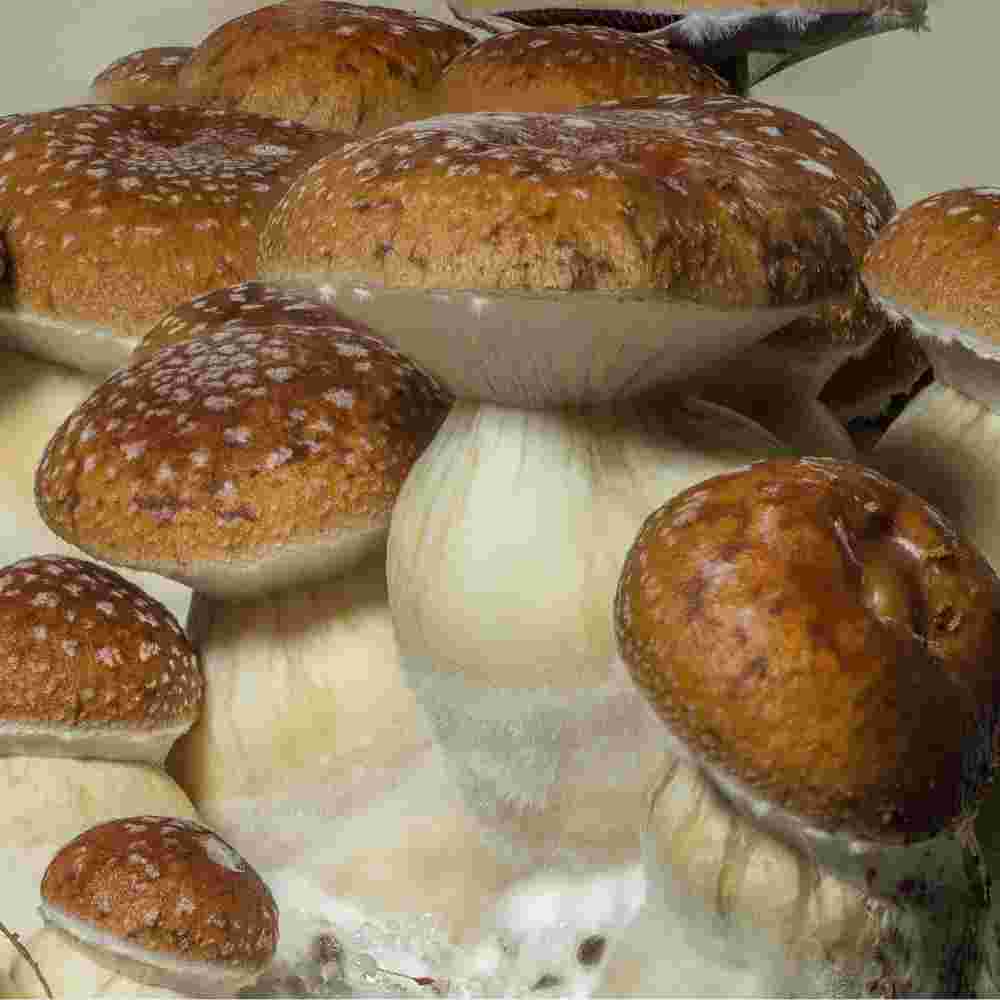
Introduction to Koh Samui Spores
Koh Samui spores are a well-known lineage within the species Psilocybe cubensis, one of the most widely studied fungi in modern mycology. Psilocybe cubensis is recognised for its distinctive purple-brown spores and global distribution, making it a common subject of microscopy research and fungal taxonomy studies.
Within this species, numerous strains have emerged through historical specimen collections and the circulation of spores among mycology enthusiasts. Koh Samui cubensis is one such lineage, named after Koh Samui, a tropical island in Thailand where the strain is believed to have originated. Over time, spores associated with this lineage spread through early spore trading networks and eventually became widely available through online spore vendors.
Today, Koh Samui mushroom spores are popular among microscopy collectors who study fungal structures under magnification. Like other cubensis strains, these spores display the characteristic ellipsoid morphology and purple-brown pigmentation that make the species easily identifiable under a microscope.
Koh Samui spores are typically distributed in several formats suited to microscopy observation and archival collection. These commonly include spore syringes, spore prints, and sterile swabs, each allowing researchers to examine spore morphology and structural features in detail.
Because of their tropical origin and long-standing presence in the spore collecting community, Koh Samui cubensis spores remain a recognised and widely circulated lineage within the broader catalogue of Psilocybe cubensis strains used for microscopy research.
Quick Facts About Koh Samui Spores
Below is a quick reference overview of key characteristics associated with Koh Samui cubensis spores.
| Attribute | Details |
|---|---|
| Species | Psilocybe cubensis |
| Strain Name | Koh Samui |
| Spore Colour | Purple-brown |
| Print Density | Heavy |
| Origin | Koh Samui Island, Thailand |
| Microscopy Use | Spore morphology study |
| Circulation | Widely traded vendor lineage |
What Are Koh Samui Spores?
Koh Samui spores are microscopic reproductive cells produced by the fungal species Psilocybe cubensis. In fungi, spores perform a role similar to seeds in plants – they allow the organism to reproduce and spread to new environments. When a mature mushroom releases spores, they disperse through air currents or environmental contact, eventually settling onto suitable surfaces where they may germinate and begin a new fungal life cycle.
Within the species Psilocybe cubensis, spores develop on specialised structures called basidia, which are located on the gills beneath the mushroom cap. When these spores are released, they can accumulate in large numbers and form what is known as a spore print. In cubensis species, including Koh Samui cubensis, these deposits typically appear purple-brown in colour, a defining characteristic that helps mycologists identify the species under laboratory observation.
Koh Samui mushroom spores are commonly studied under microscopes to observe their structural features. When viewed under magnification, spores display an ellipsoid shape, a smooth outer wall, and a clearly visible germ pore, which is the point where a new fungal filament may emerge during germination. These microscopic characteristics are essential in fungal taxonomy, helping researchers distinguish species within the broader fungal kingdom.
Microscopy collectors often examine spores because they provide valuable insight into fungal classification, morphology, and evolutionary relationships. Even though many cubensis strains share similar spore characteristics, subtle variations in spore density, print appearance, and lineage history contribute to how different strains are recognised within the collecting community.
Understanding the distinction between species and strain is also important when discussing Koh Samui spores. The species Psilocybe cubensis represents a scientifically recognised taxonomic classification within the fungal kingdom. A strain, however, refers to a specific lineage or population that has been historically identified and circulated among collectors and researchers.
The Koh Samui strain is one such lineage within Psilocybe cubensis. While it shares the same species-level characteristics as other cubensis varieties, the strain name helps distinguish it within the broader network of cubensis spores that have been collected and distributed around the world.
Origins of the Koh Samui Strain
The Koh Samui strain of Psilocybe cubensis traces its origins to Koh Samui, a tropical island located in the Gulf of Thailand. This region is known for its warm temperatures, high humidity, and seasonal rainfall – environmental conditions that support the growth of many fungal species, including cubensis mushrooms.
Tropical climates such as those found on Koh Samui provide ideal ecological conditions for fungi that thrive in nutrient-rich soils and organic matter. These environments allow species like Psilocybe cubensis to develop naturally, producing spores that can disperse across the landscape and contribute to the continuation of the species.
During the late twentieth century, mycology enthusiasts and travellers began collecting fungal specimens from various regions around Southeast Asia. Specimens associated with Koh Samui were preserved and shared within small research and collecting communities interested in studying fungal morphology and taxonomy. Through these early exchanges, spores from the region became recognised as a distinct Koh Samui cubensis lineage.
As the internet expanded the global exchange of mycological materials, spores from this lineage began circulating more widely. Spore vendors started offering Koh Samui mushroom spores in different formats such as spore prints and syringes, allowing collectors and microscopy enthusiasts around the world to examine this tropical cubensis strain.
Naming fungal strains after their geographic origin is a long-standing tradition within mycology communities. Strain names such as Amazonian, Cambodian, and Mexican cubensis are examples of how collectors historically labelled specimens based on where they were first collected or documented. These geographic identifiers help enthusiasts track the historical origin and lineage of spores as they circulate among collectors.
However, it is important to understand that strain names like Koh Samui are informal lineage identifiers rather than formal scientific classifications. In fungal taxonomy, only official ranks such as genus and species are recognised. Strain names instead function as community-developed labels that help differentiate various lineages within the species.
Despite their informal status, these lineage names have become widely used within the global spore collecting community. Today, the Koh Samui strain remains one of the recognised tropical lineages of Psilocybe cubensis, studied by microscopy enthusiasts and included in many spore collections around the world.
Taxonomy & Scientific Classification
Understanding the taxonomy of Koh Samui spores requires looking at the broader scientific classification of the species Psilocybe cubensis. Taxonomy is the biological system used to organise living organisms into hierarchical categories based on shared characteristics and evolutionary relationships. In mycology, this classification helps researchers identify fungi and understand how different species relate to one another.
The Koh Samui strain belongs to the following taxonomic hierarchy:
Kingdom
Fungi
Phylum
Basidiomycota
Class
Agaricomycetes
Order
Agaricales
Family
Hymenogastraceae
Genus
Psilocybe
Species
Psilocybe cubensis
Within this structure, the most important classification level for identifying mushrooms is the species. In this case, the species is Psilocybe cubensis, a well-documented fungus that grows in tropical and subtropical environments across the world. Members of this species share consistent biological characteristics, including purple-brown spore deposits, similar microscopic structures, and comparable reproductive mechanisms.
The Koh Samui strain exists within this species as a particular lineage that has been historically identified and circulated among collectors. Although strains may carry different names, they all remain part of the same species. This means that Koh Samui spores share the same core genetic and morphological characteristics as other cubensis strains such as Golden Teacher, B+, or Amazonian.
In mycology, a strain refers to a population of organisms that originated from a specific geographic location, specimen collection, or lineage history. These strains may develop recognisable characteristics through environmental adaptation or selective preservation by collectors, but they do not represent separate species.
For this reason, strain names like Koh Samui function as informal lineage identifiers rather than official taxonomic categories. Only classifications such as genus and species are formally recognised in scientific taxonomy. The strain name simply helps researchers and collectors distinguish one cubensis lineage from another within the broader species.
Microscopic Characteristics of Koh Samui Spores
One of the primary reasons collectors study Koh Samui cubensis spores is to examine their microscopic features. Under magnification, fungal spores reveal a range of structural characteristics that help mycologists identify species and understand their reproductive biology. Like other members of the species Psilocybe cubensis, Koh Samui spores display several well-documented morphological traits.
Spore Shape
The spores of Koh Samui cubensis exhibit the ellipsoid morphology typical of the species. When viewed under a microscope, they appear slightly elongated with rounded ends rather than perfectly spherical. This oval shape is one of the defining characteristics used to identify Psilocybe cubensis spores during microscopic examination.
The ellipsoid form helps distinguish cubensis spores from those of other fungal species that may produce spherical, cylindrical, or irregularly shaped spores.
Spore Size
The size of Koh Samui spores generally falls within the typical range observed for Psilocybe cubensis. Most spores measure approximately:
11–17 micrometres (µm) in length
This size range is consistent across many cubensis strains, which means that individual strains are rarely distinguished based solely on spore dimensions. Instead, size is used primarily to confirm species identification when combined with other morphological characteristics.
Spore Colour
When large numbers of spores accumulate together, they form a spore print that appears purple-brown in colour. This pigmentation is a defining feature of Psilocybe cubensis and is one of the easiest characteristics to observe during identification.
Under a microscope, individual spores appear slightly translucent but maintain the same dark purple-brown tone when viewed in dense clusters.
Germ Pore
A distinctive feature of cubensis spores is the presence of a germ pore. This is a small opening located at one end of the spore that allows the emerging fungal filament, known as a hypha, to develop during germination.
The germ pore is typically clearly visible under sufficient magnification, appearing as a small circular or flattened area on the spore surface.
Spore Wall
Koh Samui spores possess a relatively thick outer wall, which helps protect the genetic material contained within the spore. This protective layer allows spores to survive environmental stresses such as temperature changes, moisture fluctuations, and physical disturbance during dispersal.
The wall thickness also contributes to the durability of spores when preserved in collections for microscopy study.
Surface Texture
The outer surface of cubensis spores, including those of the Koh Samui strain, is typically smooth and non-ornamented. Unlike some fungal species that produce textured or spiny spores, Psilocybe cubensis spores maintain a relatively uniform exterior surface when viewed under magnification.
This smooth texture is another identifying trait used in microscopic analysis.
Microscopy Diagram
Below is a simplified diagram illustrating the general structure of a cubensis spore:
     ________
   /          \
  |            |
  |            |
   \____  ____/
        \/
     Germ Pore
Examining these microscopic characteristics allows researchers and collectors to confirm the identity of Koh Samui mushroom spores and better understand how they fit within the broader morphology of the Psilocybe cubensis species.
Koh Samui vs Other Cubensis Strains
Within the species Psilocybe cubensis, numerous strains have emerged through historical specimen collections and the long-standing exchange of spores within the mycology community. The Koh Samui strain is one such lineage, recognised for its tropical origin and wide circulation among collectors.
Although cubensis strains often carry unique names, their spore morphology remains extremely similar at the species level. Most strains produce ellipsoid spores with purple-brown pigmentation and a visible germ pore when observed under magnification. Because of this, the primary differences between strains typically relate to lineage history, geographic origin, and collector tradition, rather than major biological distinctions.
Similar Spore Morphology
From a microscopic perspective, Koh Samui cubensis spores display the same core features as other cubensis lineages. These include:
- Ellipsoid spore shape
- Smooth outer surface
- Purple-brown pigmentation in spore prints
- Visible germ pore under magnification
These shared traits mean that spores from strains such as Golden Teacher, B+, Hillbilly, Z-Strain, and Amazonian are often indistinguishable purely by microscopy.
Instead, these strain names primarily reflect historical specimen origin and lineage circulation within the collecting community.
Geographic Naming Traditions
Many cubensis strains are named after the regions where specimens were originally collected. The Koh Samui strain, for example, takes its name from Koh Samui, where early specimens were documented.
Other strains follow similar geographic or cultural naming patterns:
- Amazonian refers to specimens associated with the Amazon region of South America.
- Hillbilly is believed to originate from collections made in Arkansas in the United States.
- B+ and Z-Strain represent vendor-circulated lineages that became stabilised within commercial spore trading networks.
- Golden Teacher became widely recognised through early collectors who circulated spores under that distinctive name.
These naming traditions help collectors track lineage history, even though the strains remain genetically part of the same species.
Popularity Among Collectors
Among microscopy enthusiasts, Koh Samui mushroom spores remain a popular addition to spore collections. Their tropical origin and long-standing circulation in spore vendor catalogues have made them a familiar name alongside other well-known cubensis strains.
Collectors often choose different strains simply to diversify their collections or compare spore morphology across lineages, even though the differences are subtle.
Spore Print Density
Another point of comparison between strains is the density of their spore prints. Cubensis mushrooms typically produce heavy spore deposits due to the large number of spores released from the gills.
The Koh Samui strain is known for producing dense purple-brown spore prints, similar to most other cubensis lineages.
Cubensis Strain Comparison Table
| Strain | Spore Colour | Print Density | Lineage Type |
|---|---|---|---|
| Koh Samui | Purple-brown | Heavy | Thai lineage |
| Golden Teacher | Purple-brown | Heavy | Classic lineage |
| B+ | Purple-brown | Heavy | Widely circulated |
| Hillbilly | Purple-brown | Heavy | Arkansas lineage |
| Amazonian | Purple-brown | Heavy | South American lineage |
By comparing strains in this way, readers can better understand how the Koh Samui strain fits within the broader cubensis lineage ecosystem, while also creating opportunities for internal linking between different strain guides.
Spore Print Characteristics
One of the most recognisable features of Koh Samui cubensis spores is the appearance of their spore prints. A spore print is created when a mushroom cap releases spores onto a surface, allowing the spores to accumulate into a visible pattern that reflects the structure of the mushroom’s gills.
In the species Psilocybe cubensis, these prints typically appear dark purple-brown, a defining characteristic that helps mycologists confirm the species during identification.
Purple-Brown Spore Deposits
When thousands or millions of spores collect together, they form a dense deposit that displays the characteristic purple-brown pigmentation associated with cubensis spores. This colour results from pigments within the spore wall that become visible when large numbers of spores overlap in a print.
Individual spores are microscopic and difficult to see with the naked eye, but when combined in a print they produce a distinct dark pattern.
Dense Print Patterns
The Koh Samui strain is known for producing heavy spore prints, meaning a large number of spores accumulate during the printing process. This density creates a dark, clearly defined print that is ideal for microscopy collection and archival storage.
Dense prints also help preserve a large quantity of spores, which makes them useful for preparing microscope slides or maintaining long-term spore collections.
Print Symmetry and Gill Patterns
Spore prints often display symmetrical radial patterns that mirror the arrangement of the mushroom’s gills. Because spores fall directly downward from the gills beneath the cap, the resulting print can reveal a detailed outline of the gill structure.
These radial lines and curved patterns can make spore prints visually striking and scientifically informative.
Use in Microscopy Slide Preparation
Spore prints are frequently used as a starting point for microscopy slide preparation. A small portion of the spores can be transferred from the print onto a microscope slide using sterile tools. Once mounted with a suitable medium and covered with a glass coverslip, the spores can be examined under magnification to observe their morphology.
For collectors and mycology enthusiasts, spore prints therefore serve two important roles:
- Preservation of spores for long-term study
- Preparation of slides for microscopic observation
Because of their dense purple-brown prints and clear cubensis morphology, Koh Samui mushroom spores remain a popular strain among microscopy collectors who study fungal spores and maintain curated spore libraries.dered a staple strain.
Storage & Preservation Guide
Proper storage is essential for maintaining the long-term quality and viability of Koh Samui spores. Whether stored as spore syringes, spore prints, or sterile swabs, maintaining stable environmental conditions helps preserve the microscopic structures and prevents contamination.
Collectors and microscopy enthusiasts frequently ask how to store Koh Samui spores and how long cubensis spores last. The answer depends largely on temperature control, protection from light, and sterile handling practices.
Ideal Storage Temperature
The most effective way to preserve spores is by keeping them in cool, stable conditions. The recommended storage temperature for most Psilocybe cubensis spores is:
2–8°C (standard refrigeration temperature)
Refrigeration slows biological degradation and helps maintain spore integrity over extended periods. A refrigerator also provides a stable environment that protects spores from heat fluctuations that could damage cellular structures.
It is important to avoid freezing spore syringes, as expansion of the liquid inside the syringe can damage the spores or compromise the sterile container.
Light Exposure
Spores should always be stored away from direct light, particularly sunlight or strong artificial lighting. Ultraviolet radiation can degrade biological material over time, reducing the quality of spores and potentially affecting their structural characteristics.
For this reason, many collectors keep spore products in opaque containers, sealed packaging, or dark storage boxes within the refrigerator.
Shelf Life of Different Spore Formats
The expected shelf life of cubensis spores varies depending on how they are stored.
Spore syringes
• Typically remain stable for 6–12 months when refrigerated
• Must remain sealed and sterile
Spore prints
• Can remain usable for several years when stored in dry, dark conditions
• Aluminium foil or sealed envelopes are commonly used
Spore swabs
• Usually maintain quality for 6–12 months when kept in sterile packaging and refrigerated
Under proper storage conditions, many cubensis spores may remain viable even longer, though gradual degradation can occur over time.
Contamination Indicators
Collectors should occasionally inspect stored spores for signs of contamination or degradation. Potential indicators include:
- Discolouration of the spore solution
- Cloudiness or unusual particles in syringes
- Moisture damage on spore prints
- Visible microbial growth
If contamination is suspected, the sample should be discarded to avoid cross-contamination with other specimens.
Handling Protocol
Maintaining sterility is essential when handling Koh Samui mushroom spores. Recommended practices include:
- Washing or sanitising hands before handling samples
- Using sterile tools when transferring spores
- Keeping containers sealed when not in use
- Avoiding unnecessary exposure to air or humidity
By following proper storage and handling procedures, collectors can preserve the integrity of their spore samples for long-term microscopy study. For full storage instructions read How to Store Mushroom Spores
Legal Status of Koh Samui Spores (UK & International)
Understanding the legal status of Koh Samui spores is important for collectors and researchers who purchase or possess spores for microscopy study. Regulations surrounding fungal spores can vary between countries, and responsible vendors aim to provide clear guidance regarding legal compliance.
Legal Status in the United Kingdom
In the United Kingdom, spores from the species Psilocybe cubensis are generally legal to possess when sold and used strictly for microscopy or research purposes.
However, the cultivation or production of certain fungi may fall under legislation such as the Misuse of Drugs Act 1971. Because of this, reputable spore vendors clearly state that their products are intended solely for microscopy, taxonomy, and educational study.
Customers should always ensure that they are using spore samples in accordance with applicable laws and regulations. If you’re researching this strain for microscopy, read our full legal breakdown here: Are Magic Mushroom Spores Legal in the UK?
Microscopy-Only Policy
Most UK spore vendors operate under a microscopy-only policy. This means that spores are sold for:
- Microscopic observation
- Taxonomy research
- Spore morphology study
- Educational mycology purposes
Products such as spore prints, syringes, and swabs are therefore marketed as scientific specimens rather than cultivation materials.
Clear research-use policies help maintain transparency and ensure that vendors operate within legal boundaries.
All spores sold by Gorilla Spores are intended strictly for microscopy and taxonomic research. Please review our Legal Use Policy for more information.
International Regulations
The legal status of spores varies significantly between countries. In some regions, spores may be freely traded for research purposes, while in others their possession or importation may be restricted.
For example, certain jurisdictions treat spores associated with psychoactive mushroom species differently, even when they are intended for microscopy study.
Because laws can change and vary between regions, international customers should research local regulations before ordering spores from overseas vendors.
Buyer Responsibility
Ultimately, it is the responsibility of the buyer to ensure that purchasing or possessing spores complies with local laws. Vendors can provide general guidance, but legal requirements differ depending on location.
By maintaining clear policies regarding research use, transparency in product descriptions, and compliance with UK regulations, reputable spore suppliers help promote responsible collecting and scientific study of fungal spores.
Frequently Asked Questions
Are Koh Samui spores a separate species?
No. Koh Samui spores are not a separate species. They belong to the fungal species Psilocybe cubensis. The term Koh Samui refers to a strain or lineage within this species that was historically associated with specimens collected from the island of Koh Samui in Thailand.
Where did the Koh Samui strain originate?
The Koh Samui strain is named after Koh Samui, a tropical island in the Gulf of Thailand. Early specimens linked to this lineage were collected in this region before being circulated among mycology collectors and spore vendors.
What colour are Koh Samui spores?
Like most cubensis spores, Koh Samui spores produce a purple-brown spore print when deposited in large numbers. This colour is one of the defining visual characteristics used to identify the species.
Are Koh Samui spores legal in the UK?
In the United Kingdom, spores from Psilocybe cubensis are generally legal to possess when intended for microscopy or research purposes. However, cultivation or production of certain fungi may be restricted under legislation such as the Misuse of Drugs Act 1971. Buyers are responsible for ensuring they comply with local laws.
How long do Koh Samui spores last?
Under proper storage conditions, cubensis spores can remain viable for extended periods. Refrigerated spore syringes often remain stable for 6–12 months, while spore prints stored in cool, dark conditions may remain usable for several years.
Can Koh Samui spores be studied under a microscope?
Yes. Many collectors and researchers examine Koh Samui mushroom spores under microscopes to study fungal morphology, taxonomy, and spore structure. Key features such as the ellipsoid shape and visible germ pore are easily observed under magnification.
What species do Koh Samui spores belong to?
Koh Samui spores belong to the species Psilocybe cubensis, a widely distributed tropical fungus known for its purple-brown spore deposits and characteristic microscopic features.
Are Koh Samui spores related to other cubensis strains?
Yes. The Koh Samui strain is one of many lineages within Psilocybe cubensis. Other well-known strains include Golden Teacher, B+, Hillbilly, and Z-Strain. These strains share the same species classification but differ in lineage history and naming traditions.
What forms are Koh Samui spores commonly sold in?
Koh Samui spores are typically available to collectors in several formats, including spore syringes, spore prints, and sterile swabs. These formats allow microscopy enthusiasts to prepare slides and observe spore structures under magnification.
Why do cubensis strains have different names?
Strain names help collectors track historical lineage, geographic origin, or vendor circulation. However, these names are informal identifiers rather than official scientific classifications. All cubensis strains remain part of the species Psilocybe cubensis.

Written by the Gorilla Spores Research Team
The Gorilla Spores Research Team produces and reviews educational content focused on Psilocybe cubensis strains, spore morphology, and microscopy-based observation. All reference material is created for lawful research and educational purposes and is reviewed for accuracy, clarity, and responsible presentation. View author profile