
Purple Mystic Spores
Purple Mystic Spores Are A Florida Cubensis Strain Known for Dark Spore Prints and Collector Appeal
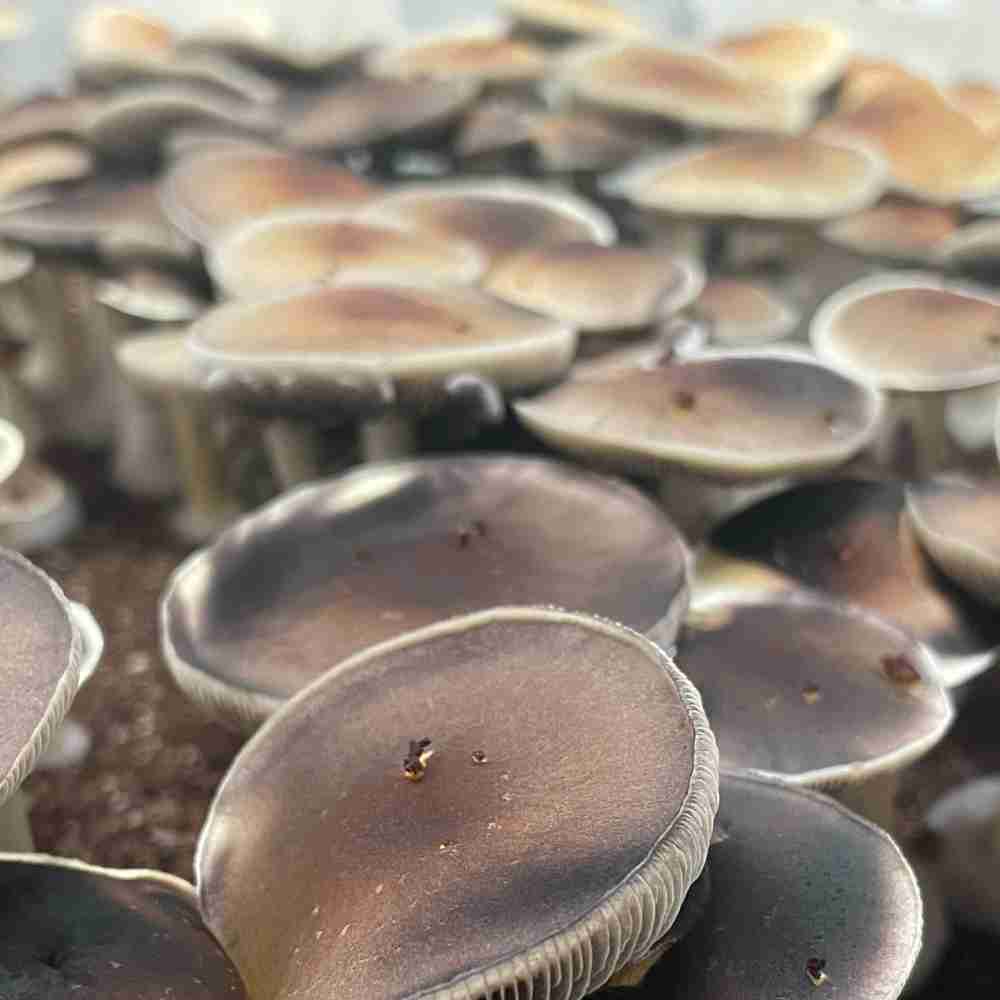
Purple Mystic spores come from the Purple Mystic strain of Psilocybe cubensis, a well-known variety valued within mycology communities for its distinctive spore characteristics and reputation among collectors. As with other cubensis varieties, Purple Mystic spores are commonly studied under the microscope by researchers and enthusiasts interested in fungal morphology and spore structure.
Among the many cubensis strains documented in strain libraries, Purple Mystic has gained a loyal following due to its dark spore prints and consistent cubensis genetics. These qualities make it particularly interesting for microscopy work, where clearly visible spores allow detailed examination of shape, colour, and structure.
Collectors often obtain Purple Mystic spores in two common formats: spore syringes and spore prints. Both are prepared for microscopy and taxonomic observation, allowing mycology enthusiasts to study spores in a sterile and controlled way.
Because of its reputation within the cubensis community, Purple Mystic frequently appears in online strain databases and spore catalogues. Many collectors include it as part of a broader library alongside other classic cubensis varieties.
In this guide, we’ll explore what Purple Mystic spores are, the history of the strain, its origins, and why it continues to attract interest from collectors and microscopy enthusiasts.
What Is the Purple Mystic Strain?
The Purple Mystic strain is a recognised variety of Psilocybe cubensis, one of the most widely studied species of psychedelic mushrooms in the world. While many cubensis strains share similar genetic foundations, each named variety is typically identified by subtle differences in morphology, origin stories, or the communities that helped popularise them.
Purple Mystic is particularly known for producing dark purple-brown spore prints, which are characteristic of the cubensis species but often appear especially rich in colour in this variety. This makes the spores visually striking when viewed under magnification and contributes to the strain’s popularity among collectors.
The strain is widely believed to originate from Florida, a region known for naturally occurring cubensis populations due to its warm, humid climate and abundant grazing land. Over time, spores believed to come from Florida specimens began circulating within mycology communities and were eventually labelled as Purple Mystic.
Today, Purple Mystic is considered a classic cubensis strain and frequently appears in online strain libraries alongside varieties such as Golden Teacher, B+, and Mazatapec. Although the genetic differences between cubensis strains can be subtle, naming and cataloguing them helps collectors document the diversity found within the species.
For microscopy enthusiasts, Purple Mystic cubensis spores provide a clear and reliable example of typical cubensis spore morphology, making them a useful addition to any spore collection.
Origins and History of Purple Mystic
Like many cubensis varieties, the history of the Purple Mystic strain is closely tied to the growth of online mycology communities in the late 1990s and early 2000s. During this period, hobbyists and researchers began exchanging spores and documenting different cubensis varieties through early internet forums and spore trading networks.
Purple Mystic is generally believed to have originated from Florida, where Psilocybe cubensis naturally occurs in warm pasture environments. Specimens collected from the region were noted for producing particularly dark spore prints, and the name “Purple Mystic” gradually emerged as a way to identify this distinctive line.
As spores circulated through the growing online mycology community, the strain gained recognition among collectors who were cataloguing cubensis varieties and building strain libraries. Over time, Purple Mystic became one of many named strains used to represent different regional genetics within the species.
The naming of cubensis strains is largely driven by the mycology community itself. Because Psilocybe cubensis is a globally distributed species with significant natural variation, enthusiasts began assigning names to strains based on origin, morphology, or the individuals who helped distribute them.
Today, Purple Mystic remains a well-known cubensis strain within spore trading and microscopy communities, valued both for its history and for the distinctive spore prints that gave the strain its name.
Purple Mystic Spore Characteristics (Microscopy)
Purple Mystic spores display the typical microscopic traits associated with Psilocybe cubensis, making them a reliable subject for microscopy study. Under magnification, the spores reveal the defining structural features that mycologists use to identify cubensis varieties and differentiate them from other mushroom species.
Spore Colour
One of the defining characteristics of Purple Mystic spores is their dark purple-brown colour. This pigmentation is typical of cubensis species and becomes especially visible in dense spore prints. When examined under a microscope, individual spores appear deep brown with a subtle purple hue depending on lighting and magnification.
Spore Shape
Purple Mystic spores are ellipsoid in shape, which is characteristic of Psilocybe cubensis. The spores appear slightly elongated with smooth, rounded edges. This ellipsoid structure is one of the key identifiers used during cubensis spore microscopy.
Spore Size
The spores fall within the typical cubensis size range, generally measuring around 11–17 micrometres long and 7–12 micrometres wide. Size variation is normal and can depend on the maturity of the mushroom that produced the spores.
Spore Print Appearance
When spores are collected, Purple Mystic typically produces dense purple spore deposits, forming a dark and well-defined spore print. These prints are often used by collectors and researchers to observe spore colour and density.
Microscopic Structures
Under high magnification, several key structures can be observed:
- Basidia – the microscopic cells responsible for producing spores on the gill surface
- Germ pore – a small pore located at one end of the spore where germination can occur
- Spore walls – smooth and thickened outer layers that protect the spore
These microscopic features make Purple Mystic spores an excellent example for studying cubensis spore microscopy and fungal reproductive structures.
Morphology of the Purple Mystic Mushroom
The Purple Mystic mushroom displays many of the anatomical features commonly associated with Psilocybe cubensis. Although individual specimens can vary, the overall morphology of the strain follows the classic cubensis structure, including a distinctive cap, darkening gills, and a fibrous stem.
Cap
The cap of the Purple Mystic mushroom typically begins convex in shape when young, gradually flattening as the mushroom matures. Cap colours generally range from caramel to golden brown, often becoming lighter toward the edges. In humid environments, the cap surface can appear slightly glossy.
Gills
Purple Mystic mushrooms develop closely spaced gills beneath the cap. Early in development, the gills often appear light grey, gradually darkening to deep purple or dark brown as spores mature. This colour change occurs because the gills become coated with mature spores produced by the mushroom.
Stem
The stem (stipe) is typically pale in colour, ranging from off-white to light cream. Purple Mystic stems tend to be fibrous and moderately thick, providing support for the cap structure. In some specimens, bruising may occur along the stem or cap, a reaction common among many cubensis varieties.
Spore Production
Like most cubensis strains, Purple Mystic produces consistent spore drops during maturity. As the cap opens, spores are released from the gills and fall downward, creating the dense purple spore prints that the strain is known for. These spore deposits are what allow collectors and researchers to obtain spores for microscopy observation.
The overall appearance of the Purple Mystic mushroom closely reflects the classic cubensis mushroom morphology, which is why the strain is frequently included in strain libraries and mycology catalogues.
Purple Mystic vs Other Cubensis Strains
Within the Psilocybe cubensis species, many named strains share similar genetics but have developed unique reputations within mycology communities. Purple Mystic is often compared to other well-known cubensis varieties such as Golden Teacher, B+, and Blue Meanie.
While the underlying species remains the same, collectors often catalogue strains based on historical origin, morphology, and community recognition.
Purple Mystic vs Golden Teacher
Golden Teacher is one of the most widely recognised cubensis strains and has been circulated in spore libraries for decades. Compared to Purple Mystic, Golden Teacher is typically associated with lighter golden caps and broad popularity among collectors.
Purple Mystic, on the other hand, is often associated with Florida cubensis genetics and darker spore prints, which give the strain its name.
Purple Mystic vs B+
The B+ strain is known for its widespread distribution and adaptability. It has been circulated extensively within spore trading communities and appears frequently in cubensis strain libraries.
Purple Mystic and B+ share many cubensis traits, but Purple Mystic is generally recognised as a regional Florida variety, while B+ is considered a widely distributed cultivated strain.
Purple Mystic vs Blue Meanie
Blue Meanie (cubensis variety, not to be confused with Panaeolus cyanescens) is known for darker caps and strong spore production. Like Purple Mystic, it produces the characteristic purple-brown cubensis spores.
However, Blue Meanie has developed its own reputation within cubensis collections, while Purple Mystic remains primarily known for its distinctive spore prints and Florida origin story.
Cubensis Strain Comparison
| Strain | Known For | Genetics | Spore Production |
|---|---|---|---|
| Purple Mystic | Florida cubensis variety | Traditional cubensis | Reliable |
| Golden Teacher | Famous classic strain | Traditional cubensis | Reliable |
| B+ | Widely distributed strain | Traditional cubensis | Very strong |
| Blue Meanie | Dark caps | Traditional cubensis | Strong |
Although these strains share the same species classification, collectors often catalogue them separately as part of cubensis strain comparisons and mycology libraries. These distinctions help document the diversity of named varieties within Psilocybe cubensis.
Why Collectors Study Purple Mystic Spores
Purple Mystic spores have developed a reputation among mycology enthusiasts due to their clear microscopy traits and distinctive spore prints. As part of the wider Psilocybe cubensis strain library, the variety offers collectors an interesting example of cubensis spore morphology.
Dark Spore Prints
One of the most recognisable features of the Purple Mystic strain is its dark purple-brown spore print. When spores accumulate on sterile foil or paper, they form dense deposits that clearly display the characteristic cubensis pigmentation.
These highly visible prints allow collectors to easily examine spore colour, density, and distribution patterns. Because the deposits are so dark, they are often considered ideal for microscopy slides and spore documentation.
Clear Microscopy Traits
Purple Mystic spores also display distinct cubensis microscopy structures, making them straightforward to observe under magnification. Their relatively large size and strong pigmentation allow researchers to clearly see:
- ellipsoid spore shape
- the germ pore
- smooth spore walls
- basidia structures on gill tissue
These features make Purple Mystic a useful specimen for studying cubensis spore morphology and fungal reproductive biology.
Historical Strain Interest
Purple Mystic has circulated in spore trading communities for many years and is considered part of the early catalog of named cubensis varieties. Many collectors maintain strain libraries that document different cubensis genetics and their historical origins.
Within these collections, Purple Mystic represents a recognisable Florida cubensis variety, contributing to the broader documentation of strain diversity.
For many enthusiasts, studying spores is not just about microscopy. Collectors also enjoy cataloguing and preserving the wide diversity of named cubensis strains, and Purple Mystic remains a notable entry in these growing mycological archives.
Purple Mystic Spore Syringes vs Spore Prints
Purple Mystic spores are typically available in two main formats: spore syringes and spore prints. Both options allow collectors to study cubensis spores under a microscope, but each format offers slightly different advantages.
Understanding the differences between these formats can help collectors choose the best option for their microscopy needs.
Spore Syringes
A Purple Mystic spore syringe contains spores suspended in sterile distilled water inside a sealed syringe. This format allows spores to remain evenly distributed within the liquid, making them easy to transfer onto microscope slides.
Spore syringes are popular for microscopy because they offer several advantages:
- spores are already hydrated and ready to use
- slides can be prepared quickly
- spores can be dispersed evenly for observation
- sterile preparation helps minimise contamination
Because of this convenience, spore syringes are often the most common format used by microscopy enthusiasts studying cubensis spores.
Spore Prints
A Purple Mystic spore print is created when mature mushrooms release spores onto sterile foil, paper, or glass. The result is a dense deposit of purple-brown spores that forms a visible print pattern.
Spore prints are often valued for their archival qualities. When stored properly in cool, dry conditions, prints can remain stable for many years.
Collectors appreciate spore prints because they:
- preserve large quantities of spores
- are easy to catalogue and store
- allow long-term preservation of strain genetics
Both formats serve the same fundamental purpose: providing microscopy spores for the study of cubensis spore structures.
How to Store Purple Mystic Spores
Proper storage is essential for maintaining the quality and longevity of Purple Mystic spores. When spores are kept in the right conditions, they can remain viable for microscopy study for extended periods of time.
Several factors influence how long spores last, including temperature, light exposure, and contamination risk.
Refrigeration
For best results, Purple Mystic spores should be stored in a refrigerator at temperatures between 2–8°C. Cooler temperatures slow biological degradation and help maintain spore integrity.
Spore syringes stored under refrigeration can often remain viable for 12–24 months when kept sealed and uncontaminated.
Avoid Light
Direct light — especially UV radiation — can damage spores over time. Exposure to ultraviolet light can degrade cellular structures and reduce viability.
To protect spores, they should be stored:
- inside opaque packaging
- in a dark container
- away from sunlight or artificial UV sources
Prevent Contamination
Contamination is one of the most common causes of spore degradation. To reduce risk, spores should always be kept in sealed sterile packaging and handled carefully during microscopy preparation.
Avoid opening containers unnecessarily and keep storage areas clean and dry.
Shelf Life
When properly stored:
- Spore syringes can remain usable for approximately 12–24 months
- Spore prints may last several years if kept cool, dark, and dry
Collectors interested in maximising spore longevity can learn more about best practices in the guide “How to Store Mushroom Spores Properly”
Proper storage helps preserve both spore quality and the integrity of cubensis strain collections, ensuring specimens remain suitable for microscopy study.
Legal Status of Purple Mystic Spores
Purple Mystic spores, like the spores of other Psilocybe cubensis varieties, do not contain psilocybin or psilocin. Because these compounds are not present inside the spores themselves, they are legal to possess in many regions when intended for microscopy or mycological research purposes.
As a result, spore syringes and spore prints are commonly sold to collectors and researchers who wish to study cubensis spore morphology under a microscope.
However, the legal status of mushroom spores varies depending on the country or state. Some regions restrict the sale or possession of spores associated with psilocybin-producing species.
For example, in the United States, the sale or possession of Psilocybe cubensis spores is restricted in:
- California
- Idaho
- Georgia
Anyone interested in purchasing Purple Mystic spores should always check their local regulations before ordering. Where permitted by law, spores are typically sold strictly for microscopy, taxonomy, and educational study. Please review our Legal Use Policy for more information.
You can also read more about the subject by looking at our guide “Are Magic Mushroom Spores Legal in the UK?”.
Where to Buy Purple Mystic Spores
When purchasing Purple Mystic spores, it is important to choose a reputable vendor that specialises in microscopy-grade spore samples. High-quality spores should be prepared using sterile techniques to ensure the samples remain clean and suitable for microscopic study.
Reliable spore vendors typically offer Purple Mystic spores in two common formats:
Purple Mystic Spore Syringes
These contain spores suspended in sterile distilled water inside sealed syringes. This format allows collectors to easily prepare microscope slides and distribute spores evenly for observation.
Purple Mystic Spore Prints
Spore prints consist of dense deposits of spores collected on sterile foil or paper. They are often favoured by collectors who want to archive cubensis genetics or catalogue different strains.
At Gorilla Spores, Purple Mystic samples are prepared using sterile laboratory procedures and carefully packaged to protect spore quality during shipping.
Whether you prefer spore syringes for convenient microscopy slides or spore prints for archival purposes, Purple Mystic spores are available for collectors looking to explore the diversity of cubensis strains.
Frequently Asked Questions
What are Purple Mystic spores?
Purple Mystic spores are the reproductive spores produced by the Psilocybe cubensis Purple Mystic strain. These microscopic structures contain the genetic material required for mushroom reproduction. Under a microscope, Purple Mystic spores typically display characteristics common to cubensis species, including a dark purple-brown colour, ellipsoid shape, and visible germ pore. Mycology enthusiasts often study these spores to observe cubensis spore morphology and examine the genetics of named mushroom strains.
What is the Purple Mystic strain?
Purple Mystic is a recognised variety of Psilocybe cubensis believed to originate from Florida in the United States. The strain gained popularity in early spore trading communities and online mycology forums. Like many cubensis varieties, Purple Mystic is known primarily through its spore characteristics and mushroom morphology, which collectors document as part of broader cubensis strain libraries.
Are Purple Mystic spores legal?
In many locations, Purple Mystic spores are legal because mushroom spores themselves do not contain psilocybin or psilocin. This allows them to be possessed and sold for microscopy and educational study. However, laws vary depending on the region. In the United States, the sale or possession of Psilocybe cubensis spores is restricted in California, Idaho, and Georgia. Anyone interested in purchasing spores should always check local regulations before ordering.
What colour are Purple Mystic spores?
Purple Mystic spores typically appear dark purple-brown, which is characteristic of many Psilocybe cubensis varieties. Under a microscope, individual spores often appear dark brown with a slight violet tint. When many spores accumulate together in a spore print, they form a dense purple-brown deposit that is easily visible and commonly used for microscopy preparation.
Are Purple Mystic spores good for microscopy?
Yes, Purple Mystic spores are well suited for microscopy study. Their relatively large size and strong pigmentation make them easy to observe under magnification. Under a microscope, collectors can examine structures such as the germ pore, spore walls, and overall spore shape typical of cubensis species.
Do Purple Mystic spores come in syringes or prints?
Purple Mystic spores are usually available in both spore syringe and spore print formats. Spore syringes contain spores suspended in sterile distilled water, which makes them convenient for preparing microscope slides. Spore prints consist of a dense layer of spores collected on sterile foil or paper and are often used by collectors for long-term storage or archival purposes.
How long do Purple Mystic spores last?
The lifespan of Purple Mystic spores depends largely on storage conditions. Spore syringes stored in a refrigerator at temperatures around 2–8°C can remain viable for microscopy for approximately 12–24 months. Spore prints stored in dry, dark environments may last several years if protected from contamination and excessive light.
Where do Purple Mystic mushrooms originate?
Purple Mystic is widely believed to originate from Florida cubensis genetics. The strain began circulating in spore trading communities before becoming part of online strain libraries maintained by mycology enthusiasts. Although the exact origin story is not fully documented, it remains recognised as a classic cubensis variety.
Conclusion
Purple Mystic is a well-known variety of Psilocybe cubensis that has become a familiar name within cubensis strain libraries. Believed to originate from Florida genetics, the strain is recognised for producing dark purple-brown spore prints and displaying clear cubensis microscopy traits.
For mycology enthusiasts and collectors, Purple Mystic spores offer an opportunity to study the microscopic structures that define cubensis species, including ellipsoid spores, germ pores, and basidia development. Their strong pigmentation and reliable spore deposits make them particularly useful for microscopy slides and educational research.
Beyond microscopy, the strain also holds historical interest within early spore trading communities, where collectors began cataloguing and preserving the growing diversity of named cubensis varieties.
Today, Purple Mystic continues to be studied as part of the broader documentation of cubensis genetics. For collectors interested in exploring this classic strain, Purple Mystic spore syringes and spore prints are available from Gorilla Spores, prepared under sterile conditions for microscopy and mycological study.

Written by the Gorilla Spores Research Team
The Gorilla Spores Research Team produces and reviews educational content focused on Psilocybe cubensis strains, spore morphology, and microscopy-based observation. All reference material is created for lawful research and educational purposes and is reviewed for accuracy, clarity, and responsible presentation. View author profile