
White Teacher Spores
White Teacher spores are a Psilocybe cubensis lineage strain valued for their classic purple-brown spore deposition, reliable microscopic morphology, and popularity among research-focused microscopy collectors.
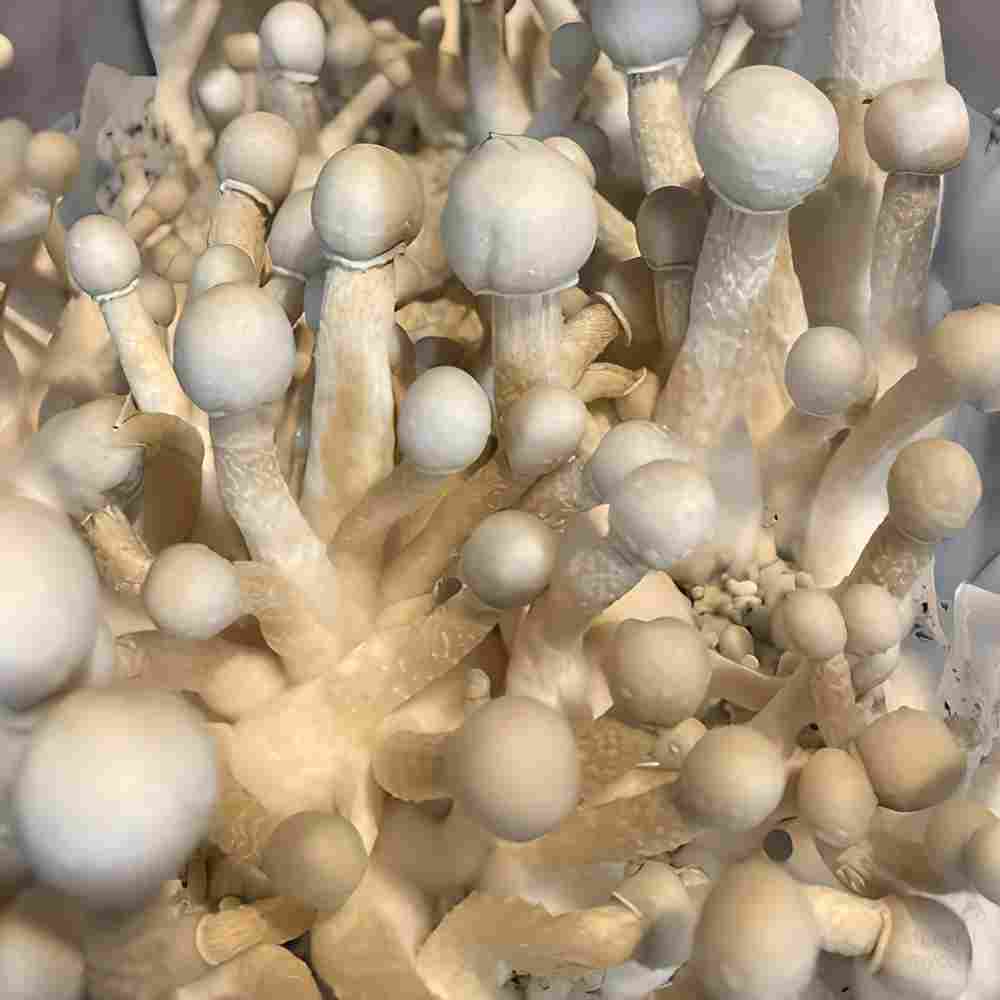
White Teacher spores are a recognised strain of the species Psilocybe cubensis, widely circulated within microscopy and mycology research communities. Like other cubensis strains, these spores are studied for their distinctive microscopic characteristics, including their purple-brown spore deposit, smooth spore surface, and clearly visible germ pore when viewed under sufficient magnification.
Within the broader taxonomy of Psilocybe cubensis, strain names such as White Teacher are used to identify particular lineages that have circulated among collectors, researchers, and spore vendors over time. While these strain names are not formally recognised scientific classifications, they help differentiate different cubensis lineages within microscopy culture and provide a consistent naming system used throughout the mycology community.
White Teacher spores attract particular interest because their name suggests a historical connection to the well-known Golden Teacher lineage. Many collectors interpret the name as referencing a variant or related lineage that maintains classic cubensis morphology while presenting distinctive visual or cultural traits within the broader “Teacher” naming tradition.
For microscopy enthusiasts and researchers, White Teacher spores represent another example of the remarkable diversity that exists within the Psilocybe cubensis species. Studying the spores of different cubensis strains allows observers to examine subtle variations in size, structure, and deposition patterns while gaining a deeper understanding of fungal taxonomy and spore morphology.
As a result, White Teacher spores have become an established part of modern cubensis spore collections and continue to circulate widely within educational mycology and microscopy research communities.
Quick Facts About White Teacher Spores
The following overview summarises the key scientific and microscopy characteristics of White Teacher spores, helping readers quickly understand the strain’s classification and typical properties within the Psilocybe cubensis lineage.
| Characteristic | Details |
|---|---|
| Species | Psilocybe cubensis |
| Strain Name | White Teacher |
| Spore Colour | Purple-brown when deposited in mass |
| Spore Shape | Ellipsoid with a visible germ pore |
| Print Density | Moderate to heavy |
| Surface Texture | Smooth outer wall |
| Genetic Lineage | Teacher-type cubensis lineage |
| Microscopy Use | Spore morphology and fungal taxonomy study |
| Circulation History | Long-standing commercial spore vendor lineage |
White Teacher spores share the core microscopic characteristics that define Psilocybe cubensis, including purple-brown spore prints and the presence of a distinct germ pore visible under magnification. These features make them suitable specimens for educational microscopy and taxonomy observation.
What Are White Teacher Spores?
White Teacher spores are a strain-level variant of the species Psilocybe cubensis, one of the most widely recognised and studied mushroom species within modern mycology. Like other cubensis strains, White Teacher mushroom spores are primarily circulated for microscopy observation, educational study, and taxonomic interest among fungal researchers and collectors.
From a scientific perspective, White Teacher cubensis does not represent a separate species. Instead, it belongs fully within the biological classification of Psilocybe cubensis. All cubensis strains share the same fundamental taxonomic identity, including their genus, family, and species classification. What differentiates strains such as White Teacher, B+, Amazonian, or Golden Teacher is not their species-level biology but rather the lineage and naming traditions that have developed within mycology and microscopy communities.
A cubensis strain typically refers to a specific lineage that has been preserved and circulated through spore prints, syringes, or research collections. Over time, these lineages become associated with particular names that help researchers and collectors distinguish them from other circulating variants of the same species. In many cases, the naming conventions reflect historical distribution patterns, geographical references, or descriptive traits associated with the lineage.
Within the context of White Teacher cubensis, the strain name suggests a connection to the well-known “Teacher” lineage of cubensis varieties. While these names do not represent formal scientific categories, they provide a useful shorthand within the community for identifying specific spore lineages and maintaining consistency in discussions about different cubensis variants.
Microscopically, White Teacher mushroom spores display the classic characteristics expected of Psilocybe cubensis spores. These include ellipsoid-shaped spores, a smooth outer wall, a purple-brown spore deposit, and the presence of a distinct germ pore visible under magnification. Because these structural traits are shared across the species, studying spores from different cubensis strains allows researchers to explore subtle variations while reinforcing an understanding of the broader species classification.
For collectors and microscopy enthusiasts, White Teacher spores represent another example of the diversity found within the Psilocybe cubensis lineage. The continued circulation of these strain names reflects the collaborative culture of mycology research communities, where spores are preserved, shared, and studied as part of a growing body of educational and taxonomic interest.
Origins of the White Teacher Strain
The White Teacher strain is widely believed to be connected to the lineage of Golden Teacher mushroom strain, one of the most well-known and widely circulated varieties of Psilocybe cubensis. While the exact origin of White Teacher spores is difficult to document with complete historical certainty, the naming convention strongly suggests that the strain emerged from the broader “Teacher” lineage that has circulated within microscopy and mycology communities for decades.
Golden Teacher itself became prominent during the late 20th century through the exchange of spore prints among hobbyist mycologists and early online spore vendors. Over time, additional cubensis variants appeared with names that referenced the Teacher lineage. The name White Teacher is generally interpreted as one of these derivative strain names, likely referring to a cubensis lineage that was associated with lighter visual characteristics or simply distinguished from the original Golden Teacher through vendor branding and community naming traditions.
The emergence of strain names such as White Teacher reflects the unique culture of modern spore distribution. Unlike formal scientific taxonomy, which follows strict classification rules, cubensis strain names are typically created and popularised through the circulation of spores within research and microscopy communities. Spore vendors, collectors, and enthusiasts play a major role in maintaining and sharing these lineages. When a particular spore print or lineage begins to circulate widely under a specific name, that name often becomes established within the community even though it does not represent a formal biological classification.
Throughout the 1990s and early 2000s, the growth of online spore vendors and mycology forums allowed cubensis strains to spread rapidly across Europe and North America. During this period, many strain names became standardised simply through repeated use by vendors and collectors. White Teacher spores appear to have entered circulation during this broader expansion of the cubensis spore market, gradually becoming recognised as part of the wider Teacher lineage family.
It is important to understand that names like White Teacher, Golden Teacher, B+, or Z-Strain are not formal taxonomic categories recognised by academic mycology. All of these strains belong to the same biological species: Psilocybe cubensis. The strain names function primarily as community identifiers that help track the historical lineage and distribution of particular spore collections.
Despite the informal nature of these naming conventions, they remain useful within microscopy culture. They allow collectors and researchers to reference specific cubensis lineages while preserving the history of how different strains have circulated through mycology communities over time.
Taxonomy & Scientific Classification
Understanding the taxonomy of White Teacher spores requires placing the strain within the broader scientific classification of fungi. Although “White Teacher” is a commonly used strain name within microscopy communities, it is not a formal biological classification. Instead, White Teacher belongs to the species Psilocybe cubensis, which sits within a well-defined hierarchy of fungal taxonomy.
Scientific classification allows mycologists to organise organisms according to shared evolutionary characteristics. This hierarchical system moves from broad biological groupings down to the individual species level.
Taxonomic Classification
Kingdom: Fungi
Phylum: Basidiomycota
Class: Agaricomycetes
Order: Agaricales
Family: Hymenogastraceae
Genus: Psilocybe
Species: Psilocybe cubensis
At the highest level, White Teacher belongs to the Fungi kingdom, a diverse group of organisms that includes mushrooms, yeasts, moulds, and other spore-producing life forms. Within this kingdom, it falls under the phylum Basidiomycota, which contains fungi that reproduce through specialised reproductive structures known as basidia.
The class Agaricomycetes includes many familiar mushroom-forming fungi. Members of this class typically produce fruiting bodies with gills, pores, or other spore-bearing surfaces. Within this class, White Teacher spores belong to the order Agaricales, a large group that contains many gilled mushroom species.
Moving further down the classification hierarchy, the family Hymenogastraceae contains the genus Psilocybe, which includes a number of species recognised for their distinctive spore characteristics and ecological roles.
Finally, the species level is Psilocybe cubensis, the biological category to which White Teacher spores belong. All cubensis strains, including Golden Teacher, B+, Amazonian, and Z-Strain exist within this same species classification.
The name White Teacher therefore represents a strain-level identifier, not a separate species or taxonomic category. Strain names are used within microscopy and mycology communities to differentiate particular spore lineages that have circulated through collectors and vendors over time.
By placing White Teacher spores within the scientific framework of Psilocybe cubensis, researchers can better understand their relationship to other cubensis strains and study the shared morphological characteristics that define this well-known species.
Microscopic Characteristics of White Teacher Spores
One of the most important ways mycologists study fungal species is through microscopic spore analysis. The spores of White Teacher cubensis display the characteristic structural features associated with the species Psilocybe cubensis, making them useful specimens for taxonomy and microscopy observation.
Although strain names like White Teacher identify specific lineages circulating within mycology communities, the spores themselves maintain the fundamental morphology that defines the Psilocybe cubensis species.
Below are the key microscopic features typically observed when examining White Teacher mushroom spores under magnification.
Spore Shape
White Teacher spores exhibit the ellipsoid to sub-ellipsoid shape that is typical of Psilocybe cubensis. Under a microscope, they appear slightly elongated rather than perfectly spherical.
This ellipsoid morphology is an important diagnostic feature used in fungal identification. When viewed in profile, the spores often appear symmetrical with a slightly tapered end where the germ pore is located.
The consistent ellipsoid shape helps differentiate cubensis spores from those of some other genera, which may display round, angular, or irregular spore forms.
Spore Size
The spores of White Teacher cubensis generally fall within the typical size range observed for the species.
Approximate spore dimensions:
- Length: 11–17 µm
- Width: 7–12 µm
These measurements can vary slightly depending on the specimen and observation conditions, but they consistently fall within the established size range for Psilocybe cubensis spores.
Measuring spores under a calibrated microscope is a common technique used in fungal taxonomy. Mycologists often use spore size ranges as part of a broader identification framework that includes colour, germ pore structure, and other microscopic features.
Spore Colour
When spores accumulate in large numbers, they form a purple-brown mass deposit, commonly referred to as a spore print. This colouration is one of the defining characteristics of Psilocybe cubensis.
Under direct microscopic observation, individual spores may appear lighter in colour, but when deposited together they create the distinctive purple-brown tone used as a key identification marker.
Spore colour is an important trait because it helps distinguish cubensis from species that produce black, rust-coloured, or white spore prints.
Germ Pore
A prominent germ pore is one of the most distinctive structural features of cubensis spores.
The germ pore is a small circular opening located at one end of the spore. This structure plays a role in the germination process, allowing the emerging fungal hyphae to grow from the spore under suitable conditions.
Under magnification, the germ pore appears as a slightly flattened or darkened area on the spore surface. Its presence is a reliable microscopic indicator used in the identification of Psilocybe cubensis.
Spore Wall Thickness
White Teacher spores possess relatively thick spore walls, which is another characteristic feature of cubensis spores.
The thicker outer wall helps protect the internal cellular structures of the spore and contributes to its durability during environmental dispersal. Under microscopy, this thicker wall may appear as a clearly defined outer boundary around the spore body.
Spore wall thickness can vary slightly between individual spores, but the overall structure remains consistent with the cubensis species profile.
Surface Texture
The surface texture of White Teacher spores is smooth, lacking the ridges, spines, or ornamentation seen in some other fungal species.
This smooth outer wall is typical of Psilocybe cubensis and is another useful diagnostic trait when analysing spores under a microscope.
The absence of ornamentation gives the spores a clean, rounded appearance, particularly when viewed with higher magnification.
Example Microscopy Diagram
The simplified diagram below illustrates the typical shape and germ pore placement of a cubensis spore.
     ________
   /          \
  |            |
  |            |
   \____  ____/
        \/
     Germ Pore
In this illustration:
- The ellipsoid body represents the spore itself.
- The germ pore is positioned at one end of the spore.
- The outer boundary represents the smooth spore wall.
Together, these microscopic characteristics, ellipsoid shape, purple-brown spore colour, smooth outer wall, and prominent germ pore confirm that White Teacher spores fit squarely within the established morphological profile of Psilocybe cubensis. These traits make them valuable specimens for educational microscopy and fungal taxonomy study.
White Teacher vs Other Cubensis Strains
Within the world of Psilocybe cubensis microscopy research, many strain names have emerged to describe particular lineages that circulate among collectors and spore vendors. While these strains all belong to the same biological species, they often develop distinct reputations based on their historical distribution, naming traditions, and popularity within the mycology community.
White Teacher spores are commonly discussed alongside several other well-known cubensis strains, particularly those that have been widely circulated through microscopy culture over the past few decades. Comparing these lineages helps provide context for where White Teacher sits within the broader cubensis strain ecosystem.
Below is a comparison with four of the most recognised cubensis strains: Golden Teacher, B+, Z-Strain, and Amazonian.
White Teacher vs Golden Teacher
White Teacher is widely believed to be connected to the Golden Teacher mushroom strain lineage, one of the most historically significant cubensis strains. Golden Teacher became popular in the 1980s and 1990s and remains one of the most recognisable strain names among collectors.
The name White Teacher suggests a derivative or related lineage within this broader “Teacher-type” naming tradition. Both strains produce the characteristic purple-brown spore deposits associated with cubensis and are frequently included in microscopy collections due to their well-documented history.
Golden Teacher generally has a slightly longer circulation history and therefore holds a stronger reputation among long-time collectors.
White Teacher vs B+
The B+ strain is one of the most widely distributed cubensis lineages in the global spore market. Its popularity stems largely from its early circulation through online spore vendors during the expansion of internet mycology communities in the late 1990s and early 2000s.
Compared to White Teacher, B+ has a broader commercial history and is often regarded as a “classic” cubensis strain due to its longevity in the market. Both strains produce similar purple-brown spores with heavy spore deposits typical of the species.
Because B+ spores have circulated for many years, they often carry strong recognition among collectors, while White Teacher remains a more niche lineage within the Teacher family.
White Teacher vs Z-Strain
Z-Strain is another widely known cubensis lineage that gained popularity through spore vendors who promoted it as a stabilised commercial strain. Although the exact origin of the name remains debated, Z-Strain quickly became a staple in many spore catalogues.
From a microscopy perspective, Z-Strain spores share the same fundamental morphology as other cubensis strains. Their purple-brown colour and heavy print density align with the species profile.
Compared to Z-Strain, White Teacher is typically associated with the Teacher lineage tradition, whereas Z-Strain is more commonly viewed as a vendor-stabilised cubensis lineage with its own independent naming history.
White Teacher vs Amazonian
The Amazonian strain is often linked to cubensis samples believed to have originated from South American regions. As the name suggests, its branding emphasises geographic lineage rather than lineage connection to another strain family.
Amazonian spores are known for producing dense purple-brown prints, consistent with cubensis spores. The strain has gained popularity partly because of its association with tropical environments and its reputation as a historically circulated cubensis variety.
White Teacher differs in that its identity is tied more closely to the Teacher naming tradition rather than a geographic lineage.
Cubensis Strain Comparison Table
| Strain | Spore Colour | Print Density | Lineage Type |
|---|---|---|---|
| White Teacher | Purple-brown | Moderate–Heavy | Teacher lineage |
| Golden Teacher | Purple-brown | Heavy | Classic lineage |
| B+ | Purple-brown | Heavy | Widely circulated |
| Amazonian | Purple-brown | Heavy | South American lineage |
| Z-Strain | Purple-brown | Heavy | Stabilised commercial lineage |
Why These Comparisons Matter
Despite the differences in naming history and reputation, it is important to remember that all of these strains remain part of the same species: Psilocybe cubensis. The variations between them largely reflect historical distribution patterns, community naming conventions, and vendor lineage tracking rather than fundamental biological differences.
Spore Print Characteristics
One of the defining traits of White Teacher spores is their purple-brown spore deposit, a characteristic shared by the species Psilocybe cubensis. Spore prints are an essential identification tool in mycology because they reveal the colour and density of spores when they accumulate in large numbers.
Understanding the spore print characteristics of White Teacher cubensis provides valuable context for microscopy research and fungal taxonomy.
Spore Colour in Mass Deposit
When large numbers of White Teacher spores collect together, they form a deep purple-brown spore print. This colouration is one of the most recognisable identifiers of Psilocybe cubensis and is frequently used by mycologists to differentiate it from other genera.
Individual spores viewed under a microscope may appear lighter or slightly translucent. However, when deposited in mass they produce the rich purple-brown tone that defines cubensis spores.
Spore print colour is one of the most widely used macroscopic identification tools in mushroom taxonomy.
Print Density
White Teacher spores typically produce moderate to heavy spore prints. Print density refers to how thickly the spores accumulate when they are deposited on a surface.
In general:
- Light prints appear faint or patchy
- Moderate prints form a clearly visible layer of spores
- Heavy prints create dense, dark deposits
White Teacher spores tend to fall within the moderate-to-heavy range, meaning that the deposited spores usually create a clearly visible purple-brown print.
Print density can vary depending on several factors, including the maturity of the specimen and environmental conditions during spore release. However, cubensis strains are generally known for producing reliable and well-defined spore deposits.
Microscopic Appearance
Under magnification, the spores that make up a White Teacher spore print display the familiar cubensis morphology:
- Ellipsoid shape
- Smooth outer wall
- Visible germ pore
- Purple-brown pigmentation
These microscopic traits help confirm the species classification and allow mycologists to study subtle variations between cubensis lineages.
Although strain names such as White Teacher help track lineage circulation within the mycology community, the fundamental microscopic structure of the spores remains consistent with the species profile.
Example Spore Print Appearance
Below is a simplified illustration of what a dense cubensis spore print might resemble when viewed as a concentrated deposit.

In reality, a spore print forms a circular or radial pattern where spores fall from the gills of the mushroom cap. The resulting deposit often appears as a dark purple-brown disc, sometimes showing subtle lines corresponding to the gill structure.
Why Spore Prints Matter
Spore prints are an important observational tool in mycology because they help researchers and collectors identify species and confirm key morphological traits. For White Teacher cubensis, the combination of purple-brown spore colour and moderate-to-heavy print density aligns perfectly with the expected characteristics of Psilocybe cubensis.
Storage & Preservation Guide
Proper storage is essential for maintaining the long-term integrity of White Teacher spores. Like all spores belonging to the species Psilocybe cubensis, they can remain viable for extended periods when kept in stable conditions. Understanding how to store White Teacher spores correctly helps preserve their microscopic characteristics and prevents contamination or degradation over time.
Below are the key environmental factors that influence spore longevity and quality.
Ideal Temperature
Temperature is one of the most important factors affecting spore preservation. For long-term storage, cubensis spores should ideally be kept between 2–8°C, which corresponds to standard refrigerator temperatures.
Refrigeration slows down biological activity and reduces the risk of environmental contamination. Many microscopy collectors store spore syringes, prints, or swabs in sealed containers within a refrigerator to maintain stable conditions.
While spores can tolerate short periods at room temperature, consistent refrigeration significantly improves long-term storage outcomes.
Light Exposure
Spores should be stored away from direct light, particularly sunlight. Ultraviolet (UV) radiation can damage biological material and gradually degrade spore structures.
The best approach is to keep spores in:
- Dark storage containers
- Sealed packaging
- Refrigerated environments
A simple opaque container or storage box can help minimise light exposure and maintain stable conditions.
Shelf Life of Cubensis Spores
A common question among collectors is how long cubensis spores last. When stored correctly, Psilocybe cubensis spores can remain viable for several years.
Typical shelf-life estimates are:
- Spore syringes: 6 months to 2+ years under refrigeration
- Spore prints: several years when stored in dry, sterile conditions
- Spore swabs: typically 6–12 months depending on packaging
Actual longevity can vary depending on storage conditions, sterility, and how frequently the samples are handled.
Signs of Contamination
Spores should always be inspected visually before microscopy use. Indicators that a sample may be compromised include:
- Cloudiness or unusual particles in spore syringes
- Visible mould growth on spore prints
- Discolouration or unexpected odours
If contamination is suspected, the sample should be discarded rather than stored further.
Handling Protocol
Careful handling is important to prevent introducing contaminants. When storing or examining White Teacher spores:
- Wash or sanitise hands before handling
- Avoid unnecessary exposure to air
- Keep packaging sealed when not in use
- Store samples in clean, dry containers
Maintaining sterile handling practices helps ensure that spores remain uncontaminated and suitable for long-term microscopy study.
For full storage instructions, see:
How to Store Mushroom Spores
Legal Status of White Teacher Spores (UK & International)
The sale and possession of White Teacher spores, which belong to the species Psilocybe cubensis, is generally permitted within the United Kingdom when specimens are intended strictly for microscopy, taxonomy, and educational research purposes.
Under current UK law, spores that do not contain psychoactive compounds are typically not classified as controlled substances. However, legality is determined primarily by intended use rather than biological classification alone. For this reason, White Teacher spores sold through Gorilla Spores are marketed exclusively for research and educational microscopy applications.
Microscopy-Only Use Policy
All White Teacher spore specimens are supplied under a strict research-use framework. Customers must understand and agree that these spores are not intended for cultivation, ingestion, or any activity that violates local laws or regulations. Please review our Legal Use Policy for more information.
The microscopy-only policy helps ensure responsible distribution of fungal research materials while supporting educational mycology and taxonomy study.
International Legal Considerations
Legal regulations surrounding cubensis spores vary significantly outside the United Kingdom. Some countries enforce strict import restrictions on fungal specimens regardless of intended research purpose.
International customers are responsible for verifying:
- Local customs regulations regarding biological specimens
- Import legality of microscopy spores
- Agricultural or biosecurity restrictions
- Personal compliance with national legislation
Gorilla Spores cannot guarantee international delivery success if customs authorities restrict biological material shipments. Orders may be inspected, delayed, or returned depending on destination country rules.
Buyer Responsibility and Compliance
By purchasing White Teacher spores, customers acknowledge that they are acquiring specimens solely for legitimate microscopy and educational research use.
It is the customer’s responsibility to ensure compliance with local laws before ordering or storing fungal spores. If there is any uncertainty regarding legal status, it is recommended to review relevant legislation or seek appropriate guidance prior to purchase.
Gorilla Spores maintains a commitment to responsible scientific distribution and supports the ethical study of fungal taxonomy and microscopy research.
Frequently Asked Questions
Are White Teacher spores a separate species?
No. White Teacher spores belong to the species Psilocybe cubensis. The White Teacher name represents a strain lineage rather than a distinct biological species.
What colour are White Teacher spores?
White Teacher spores typically produce a purple-brown spore print when deposited in mass, which is characteristic of cubensis species.
Are White Teacher spores related to Golden Teacher?
White Teacher is believed to be part of the broader Teacher lineage culture that includes Golden Teacher mushroom strain variants. However, strain names do not represent formal taxonomic separation.
How long do White Teacher spores last?
When stored under refrigeration and sterile conditions, spore syringes may remain suitable for microscopy research for approximately 6–24 months, while spore prints may remain stable for several years.
Are White Teacher spores legal in the UK?
Yes. Cubensis spores are generally permitted in the United Kingdom when intended strictly for microscopy, taxonomy, and educational research purposes.
What makes the White Teacher strain unique?
White Teacher is primarily distinguished by its lineage naming history rather than major microscopic structural differences. It retains the classic cubensis morphology shared across the species.
Can White Teacher spores be studied under a microscope?
Yes. White Teacher spores are commonly used for educational microscopy, allowing observation of spore shape, germ pore structure, and wall morphology.
What species do White Teacher spores belong to?
White Teacher spores belong to Psilocybe cubensis, a widely studied mushroom species within mycology research communities.

Written by the Gorilla Spores Research Team
The Gorilla Spores Research Team produces and reviews educational content focused on Psilocybe cubensis strains, spore morphology, and microscopy-based observation. All reference material is created for lawful research and educational purposes and is reviewed for accuracy, clarity, and responsible presentation. View author profile